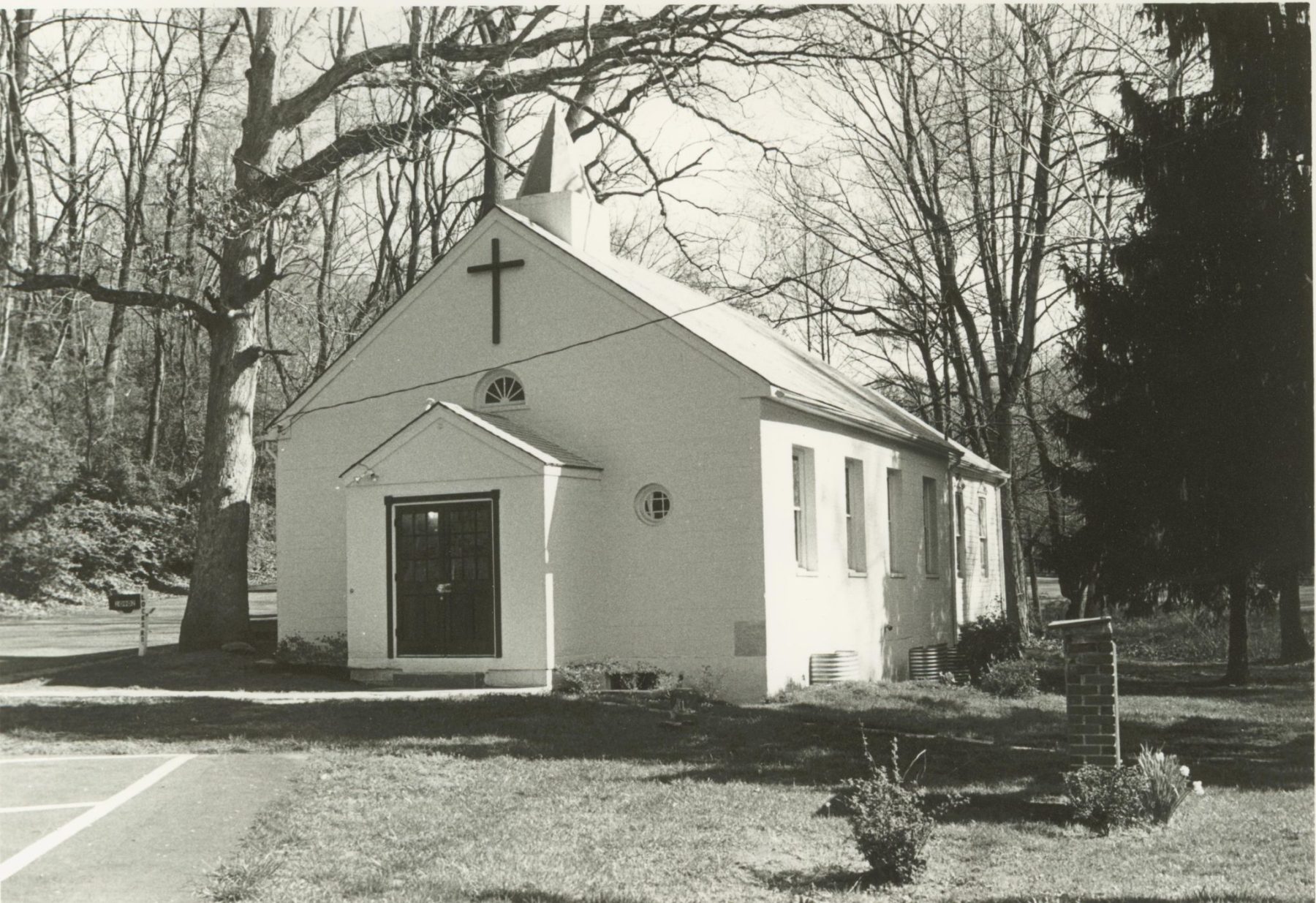
The Scotland A.M.E. Zion Church (M:29-15) is a c.1915-1924 one-story church building with a 1963-1967 front addition, located in the Scotland community between Potomac and Garrett Park. The Scotland A.M.E. Zion Church was first formed in 1905-1906, by a group of founding Scotland settlers, including members of the Dove, Mason, Crawford, and Simms families. They had not felt welcome at nearby white churches and found the distance to other African American churches in the county prohibitive, so they organized a congregation in their community.
Originally known as the Warren Church, the fledgling congregation held meetings in a private residence located a block and a half from the church’s present-day location. The origins of the church on this property date to 1915, when Reverend Otho Simms and his wife, Sarah Simms offered land for the construction of the church. The fundraising efforts to complete the church building took years, before the one-story building was completed by 1924.
While the church enjoyed a robust congregation, the predominantly African American, tax-paying community lacked basic utilities and services like running water, trash collection, and public transportation – services largely provided to residents elsewhere in Montgomery County. The roads in Scotland were unpaved and would become muddy in the winter months. Buildings were typically constructed of wood, tar paper, and tin, and most included outhouse structures. Water was sourced from a single hand-pump in the center of the neighborhood, or from the nearby Snakeden Branch Creek and spring. Only a handful of houses had electricity, and most had to rely on kerosene lamps for light.
By 1964, 23 Scotland homes were condemned by the County. In an effort to sustain and improve the 255-member Scotland community before it was entirely sold off, advocates partnered with Scotland families to form the “Save Our Scotland” committee, or “SOS.”
The SOS Board of Directors included ministers, residents of Scotland, and Joyce Siegel, a key advocate in Scotland’s late 1960’s transition who was later recognized with several awards including a place in the Montgomery County Human Rights Hall of Fame. The Scotland A.M.E Zion Church partnered with SOS to support the community during this time of transition. Congregation member, Geneva Mason fostered thirty-two children and organized many events at the Scotland A.M.E. Zion Church, including programs for pre-school children, adult gatherings, collection drives for the poor, and various other community activities, including parties and gatherings. Mrs. Mason and other A.M.E. Zion Church members also worked to fundraise money so that electrical poles could be installed in the Scotland community. In the summer of 1965, Scotland Minister Randall was among those leading the effort to get a water and sewer line extended to the Scotland church.
To find Scotland A.M.E Zion Church and all our historic districts, visit our interactive map.
Historic Significance
The Scotland A.M.E. Zion Church, believed to be the only early twentieth-century building to survive in the Scotland community, is well-recognized as a pillar of the community. The church has been in continuous use since its completion in 1924, since which time it has facilitated a sense of connection and unwavering support for the community. Between 1924 and 1967, the Scotland A.M.E. Church served and supported a struggling, tight-knit community living without running water and electricity. In 1965, the County extended water and sewer service to the A.M.E. Zion Church, giving the community its first running water and plumbing. In addition to religious services, the church has offered day care, tutoring, and other community events for a century.
The church is also significant within the context of the larger Montgomery County as an African Methodist Episcopal church. Dwindling numbers of early twentieth century African American churches in Montgomery County has placed the Scotland A.M.E. Zion Church on a short list of surviving institutions.
Process
The Scotland A.M.E. Zion Church was listed to the original Locational Atlas and Index of Historic Sites in 1976. It was designated to the Master Plan for Historic Preservation in 1993 as part of the Potomac Area Resources Master Plan process.
Scotland A.M.E. Zion Church designation document
In 2023, the church suffered damage from flooding and underwent an extensive rehabilitation. A report was developed for the church in preparation for the restoration.