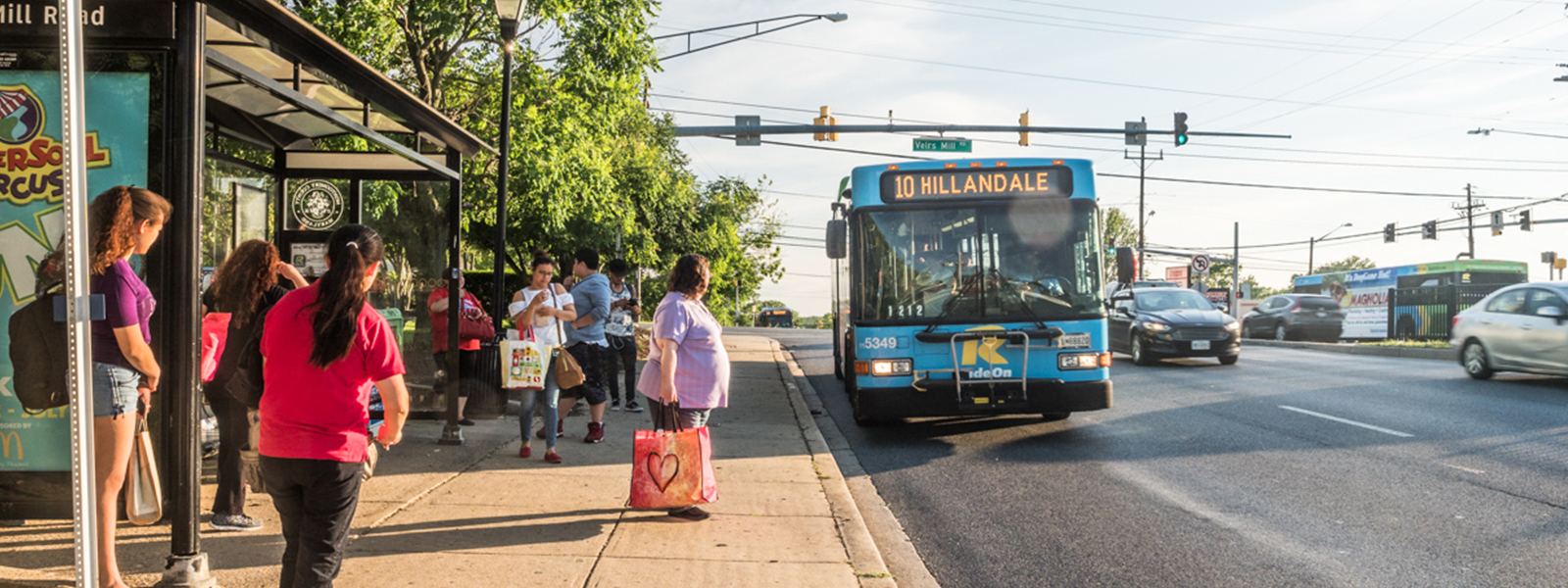
In 2020, Montgomery County’s Planning, Housing, and Economic Development (PHED) Committee approved a new way to measure whether future development will be supported by an adequate transportation system. Instead of predicting how intersections might function 30 years from now, the county now evaluates transportation performance at a broader “policy area” level, comparing 1) future conditions without the plan to 2) future conditions with the plan.
These metrics focus on:
- Job accessibility
- Travel time by car and transit
- Vehicle miles traveled (VMT)
- Mode share (how many people choose transit, biking, walking or carpooling)
- Bicycle accessibility
2026 update project
Since adoption, these metrics have been used in six master plans. However, some stakeholders feel they may be too high‑level to fully inform planning decisions. Because county leaders and community members rely on these metrics to judge whether master plans will result in adequate transportation systems, periodic review is essential.
In 2026, Montgomery Planning is collaborating with the Montgomery County Department of Transportation (MCDOT) and working with a transportation consultant to review, test, refine, and help approve updated metrics to improve how future master plans assess transportation adequacy. Concepts for metrics under consideration range from refined pedestrian and bicycle access measures to indicators of transit competitiveness and street network completeness.
Timeline
-
Winter 2026Literature review and stakeholder interviews
-
Spring-Summer 2026Draft metric development and testing
-
Fall 2026Focus groups
Metric refinement and documentation -
Winter 2026 to Spring 2027Planning Board review and County Council approval