The Montgomery County historic preservation tax credit can be used for many different types of projects. The project can be as simple as repairing a roof in-kind to engaging in a large-scale restoration project. The credit can also be used for diverse types of structures, not just houses. In the following successful projects applications, tax credit recipients restored historic garages, outbuildings, barns, and greenhouses, in addition to simple maintenance and restoration work on their residences.
Tax credit case studies
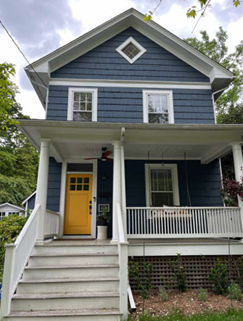
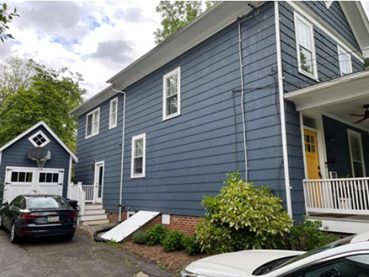
In 1993, owners on Spruce Avenue received approval for a Historic Area Work Permit to demolish a small rear addition and construct a new two-story rear addition measuring approximately 15 by 20 feet. A one-bay garage was added to the property in 2003.
As part of the home’s routine maintenance, the current owners painted both the original house and the rear addition. The total cost of painting was $16,065. Because the Takoma Park Historic District was designated in August 1992, work associated with the rear addition and the garage are not eligible for the Historic Preservation Tax Credit. Based on the total exterior wall surface area, HPC staff determined that $8,000 of the painting cost was attributable to the non-historic addition. The remaining $8,065 qualified as an eligible expense, resulting in a tax credit of $2,016.25 for the homeowners.
Major Rehabilitation
Linden Historic District, Silver Spring
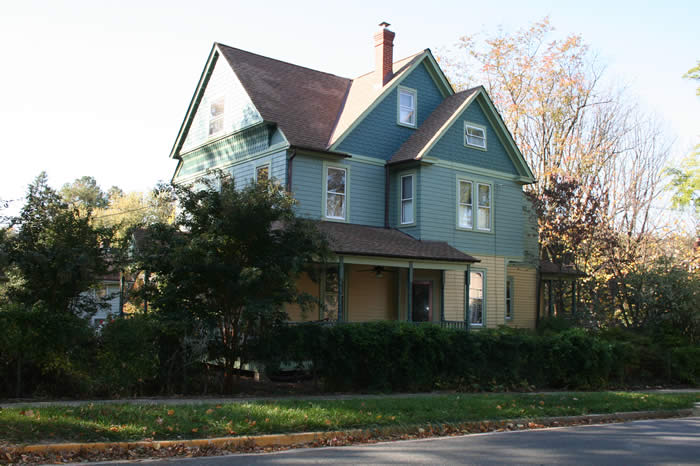
This Victorian house on Brookville Road was in deplorable condition when purchased by the current owners. Neglected for years, the house had a leaky roof, was covered over in asbestos tile, and was missing key historic design features, such as historic fishscale shingles, the subterranean greenhouse, and the original side porch.
Over several years, the owners have brought this house back to life, using solid preservation philosophy: repair what can be repaired and replace what absolutely has to be replaced with like materials. They invested considerable time and money repairing old wood windows, installing wood storm windows, repairing fishscale shingles, repairing and replacing wood siding, removing non-historic features that were a detriment to the property, such as the front porch addition, installing new landscape elements sympathetic to the original Wolfe House lot, and exterior painting.
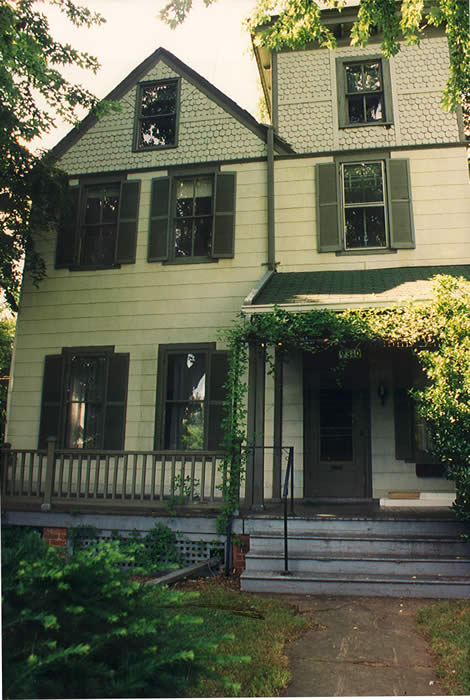
Circa 1980
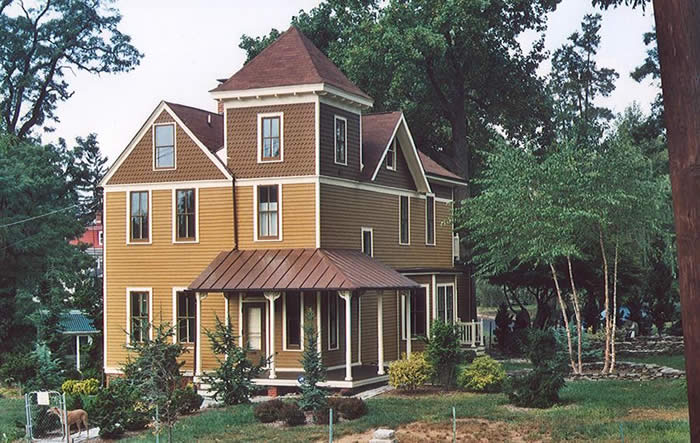
New
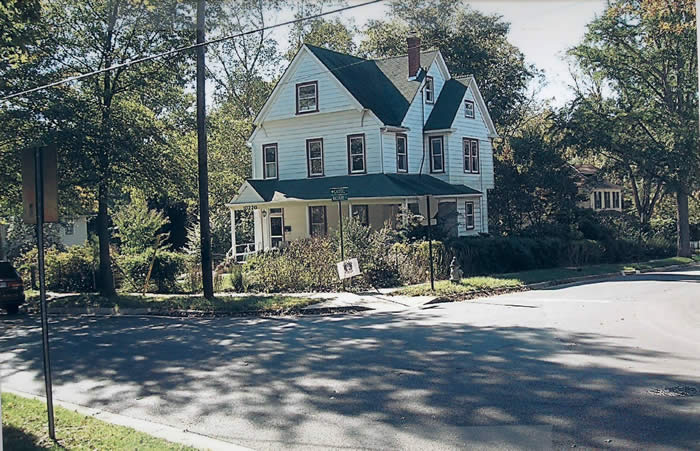
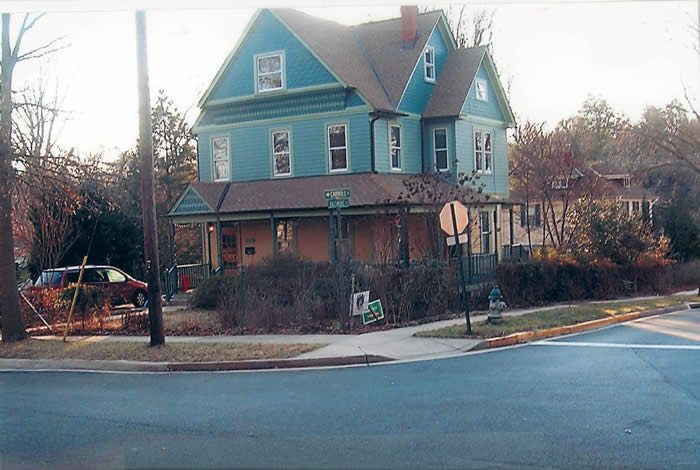
Covered over with aluminum siding in 1978, this Kensington house lost much of its intricate Victorian detail. The current owners initiated a project to remove the non-historic siding. The owners also removed a powder room, added to the side of the front porch in the 1970s, which destroyed the original porch design and removed intricate Victorian millwork.
The original lap siding and shingles, covered for years by additional layers of cladding, were in good shape. After years of neglect, the original siding needed some minor repairs and sanding, with the exception of a small area in the front porch corner where the gutters had failed.
The owners used several different types of documentation to guide their project. They consulted Victorian era pattern books, such as Robert’s Illustrated Millwork Catalog: A Source Book for Turn-of-the Century Architectural Woodwork; recollections of former owners and neighbors; and other houses in the neighborhood of similar age and style. They also used one of the best resources: the house itself. The process of removing the siding and the 1970s powder room also resulted in some great discoveries.
Before
After
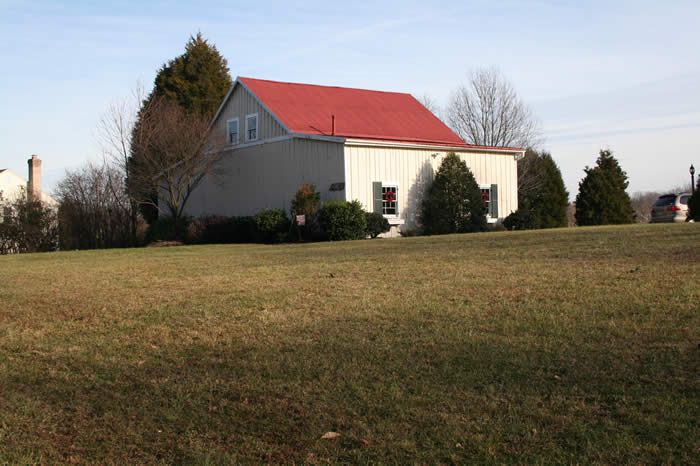
The property owners painted their standing seam metal barn roof in 2007 and received a county tax credit for this ordinary maintenance project. The barn is listed in the Master Plan as a dependency to Fertile Meadows, a house built circa 1800, which was historically associated with the Goshen Mill complex.
Regular ordinary maintenance, such as treating this barn roof, ensures preservation of the structure for years to come.
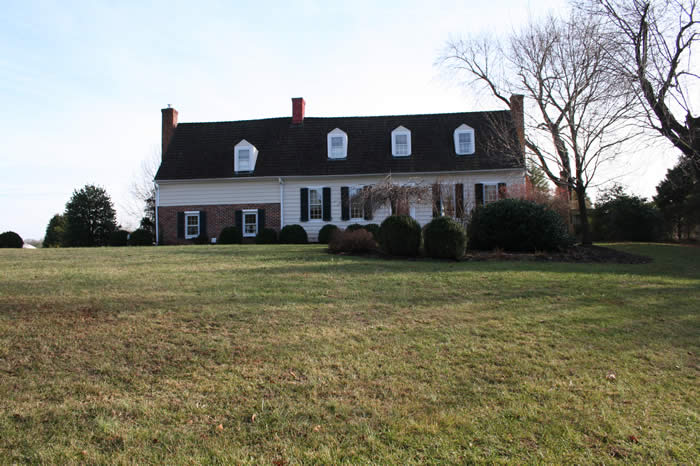
Built in 1898, the Moxley-Taplin house was in need of slate roof repairs by 2007. Slate roofing is notoriously long-lived and can be expected to remain in good condition for 100 years or longer depending on maintenance performed, climate, and other factors, such as original installation method. Rather than tear-off the old slate roof and attempt to find a substitute material, the property owners chose a preservation best practice: repair the slate tiles that could be repaired and replace in-kind what needed to be replaced. Four original copper finials were also restored to adorn the house’s dormer windows.
By appropriately sealing the building envelope and restoring documented missing features, the owners have added to the visual and historical appeal of the house and preserved the building for all Montgomery County residents to enjoy. All costs associated with the repair of the slate roof and copper finial restoration were eligible for the County Historic Preservation Tax Credit.
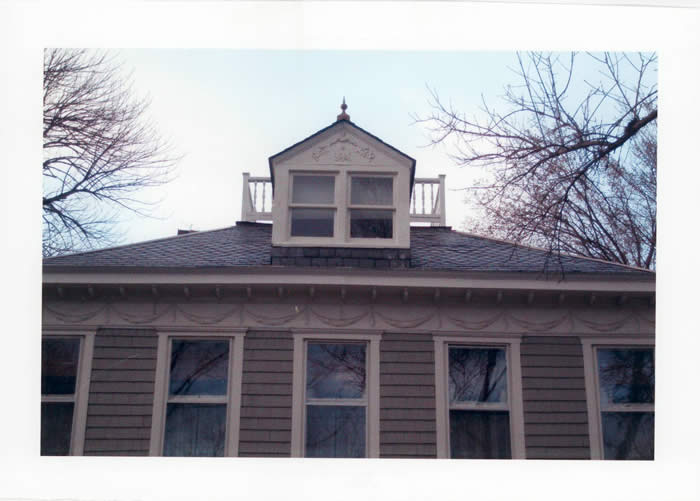
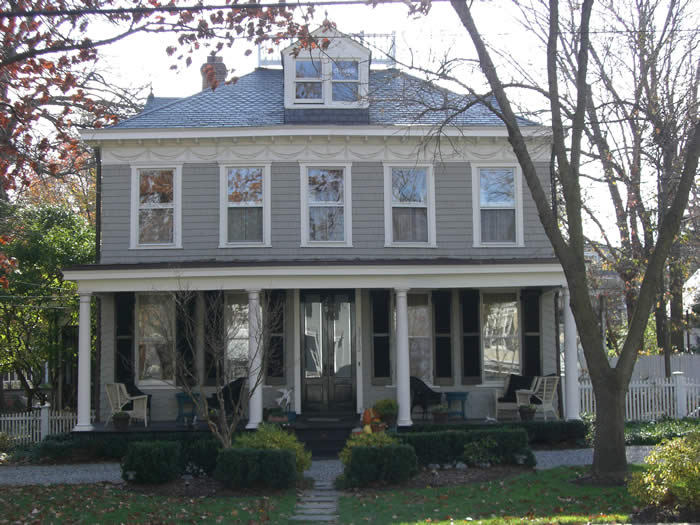
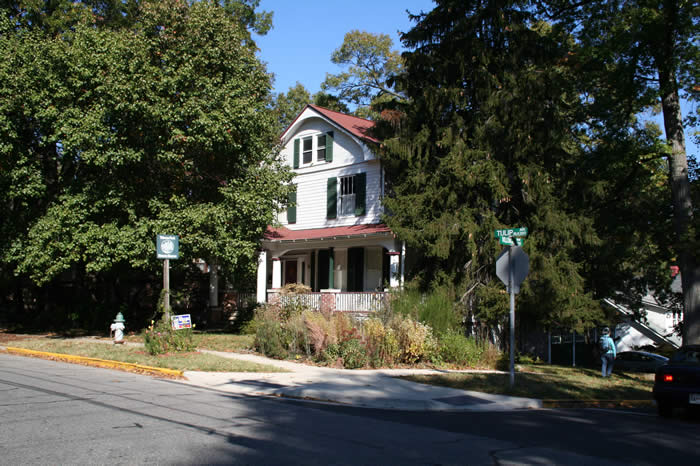
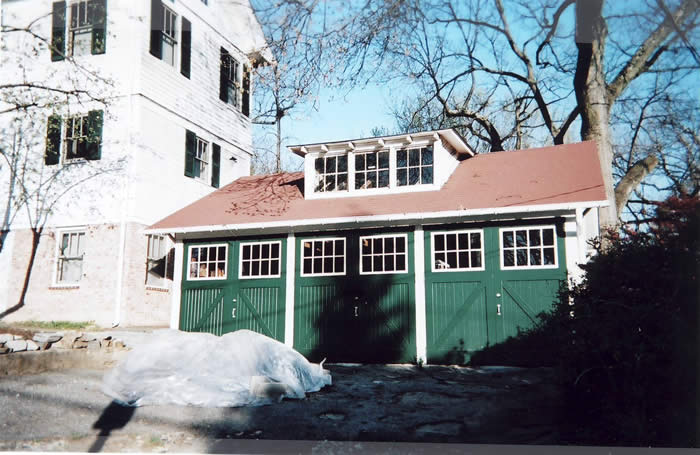
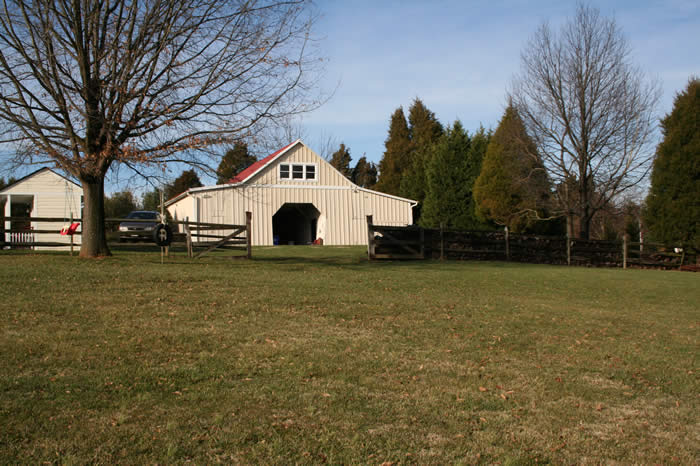
This garage on Tulip is a distinctive sight in the Takoma Park Historic District. Associated with a circa 1900 transitional Victorian house, the garage suffered from deferred maintenance and was in poor condition. The current owners decided to restore the building to its former glory—in spite of it being “just an outbuilding.” The owners feel that the garage is a significant part of their historic residence’s setting—as important as the lovely house that sits directly in front of it.
In order to preserve the three-bay garage, the structure was repaired in-kind. The owners used wood to replace rotted sheathing, straightened the sagging structure, repaired the dormer and side windows, and painted the repaired building. Due to their efforts, the garage is now a show-place along Tulip Avenue. All design and material costs associated with the garage repairs were eligible for the County Historic Preservation Tax Credit.