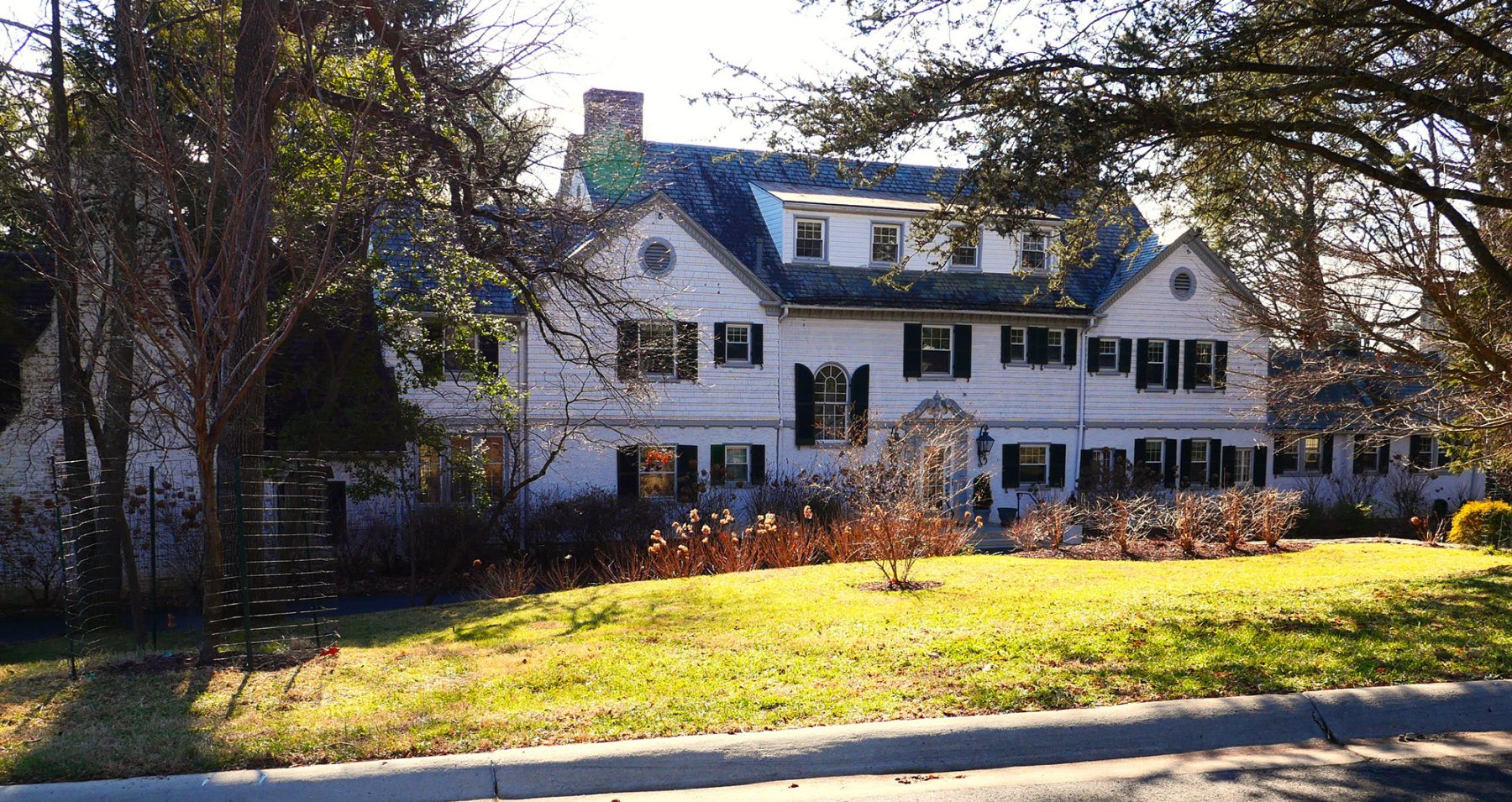
The residence is where Eunice Kennedy Shriver started a summer day camp that inspired the creation of Special Olympics
WHEATON, Md. – The Montgomery County Council approved an amendment to add Timberlawn to Montgomery County’s Master Plan for Historic Preservation. The vote follows the May 2025 recommendation by the Montgomery County Planning Board, part of The Maryland-National Capital Park and Planning Commission (M-NCPPC), to historically designate the North Bethesda house where Eunice Kennedy Shriver launched Camp Shriver, a day camp for children with intellectual disabilities that inspired the creation of Special Olympics.
“Timberlawn is a place where history and humanity intersect,” said Planning Board Chair Artie Harris. “It’s where a movement began that changed society’s understanding of inclusion and ability. The Montgomery County Planning Board is proud to help preserve that legacy, and we applaud the County Council for approving the historic designation.”
More about Timberlawn

Timberlawn remains as the only extant part of the former 280-acre North Bethesda estate where, in 1962, Eunice Kennedy Shriver, a sister of then-president John F. Kennedy, launched Camp Shriver, a day camp that inspired her to help create Special Olympics and revolutionize physical recreation for people with intellectual disabilities.
When President Kennedy appointed Sargent Shriver, Eunice’s husband, as the inaugural director of the Peace Corps in 1961, the couple relocated their family to the Timberlawn estate at 5700 Sugarbush Lane, which the family rented from 1961 to 1968 and from 1970 to 1978. The house, open fields, riding trails, and farm served as their family home and an extension of their offices.
“This designation honors the profound impact of Eunice Kennedy Shriver’s visionary work of uplifting children with intellectual disabilities and their families and sparking a global movement through the creation of Special Olympics,” said Montgomery Planning Director Jason K. Sartori. “Timberlawn embodies the idea that local history can matter on an international scale.”
The house’s architecture is noteworthy for its distinctive characteristics as a Georgian-Revival-influenced country estate designed in 1900. It’s also a remarkably intact sample of master architect Arthur Berthrong Heaton’s early and mid-career work.
Rebeccah Ballo, Montgomery Planning Historic Preservation Division Chief, said, “With its elegant design by master architect Arthur Heaton, Timberlawn tells the story of early 20th-century craftsmanship and vision. Preserving it means honoring both the people and the place that helped shape a better Montgomery County and world.”
Watch a video about the property’s legacy.
Designation of resources to Montgomery County’s Master Plan for Historic Preservation requires review by the Montgomery County Historic Preservation Commission (HPC), the Planning Board, and ultimately, a vote of final approval by the Montgomery County Council. The Planning Board’s historic designation recommendations for Timberlawn follows the HPC’s recommendation in 2024 to historically designate the property. The Historic Preservation Office within the Montgomery County Planning Department, also part of The M-NCPPC, provided comprehensive research and prepared Timberlawn’s designation report. Timberlawn’s current homeowner sought the historic designation.
Montgomery County’s historic designation process
When a property is approved to be historically designated in Montgomery County, all changes to the exterior of the property must be reviewed by the HPC before issuing any permits. Designation in the Master Plan for Historic Preservation:
- Recognizes significant architectural and cultural sites.
- Protects buildings and neighborhoods from demolition.
- Manages exterior alterations to resources.
- Provides property owners with information on care, restoration, and preservation.
- Qualifies property owners for special tax benefit programs.