By Montgomery Planning staff
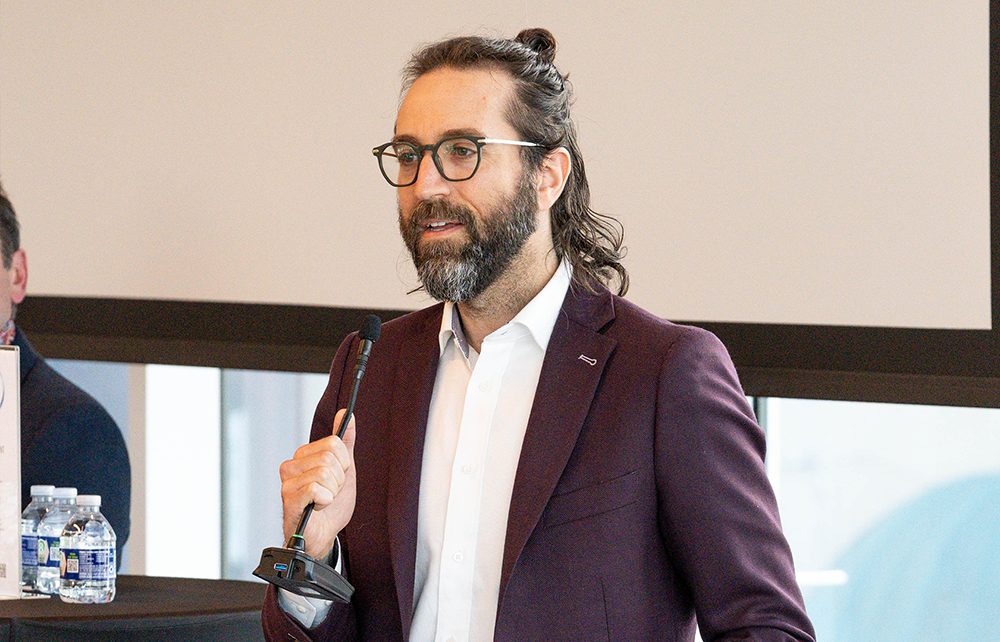
Josh Linden, a Montgomery County Planning Board Commissioner, starts his mornings with a pressing question from his 4-year-old daughter: “Are we taking the bike today?”
The answer is usually yes. The 15-minute ride to preschool aboard their electric cargo bike brings waves from passing neighbors as Linden’s daughter sings along to “Moana” and other Disney soundtracks wafting from a small speaker attached to the back.
“It’s the best part of my day,” he said.
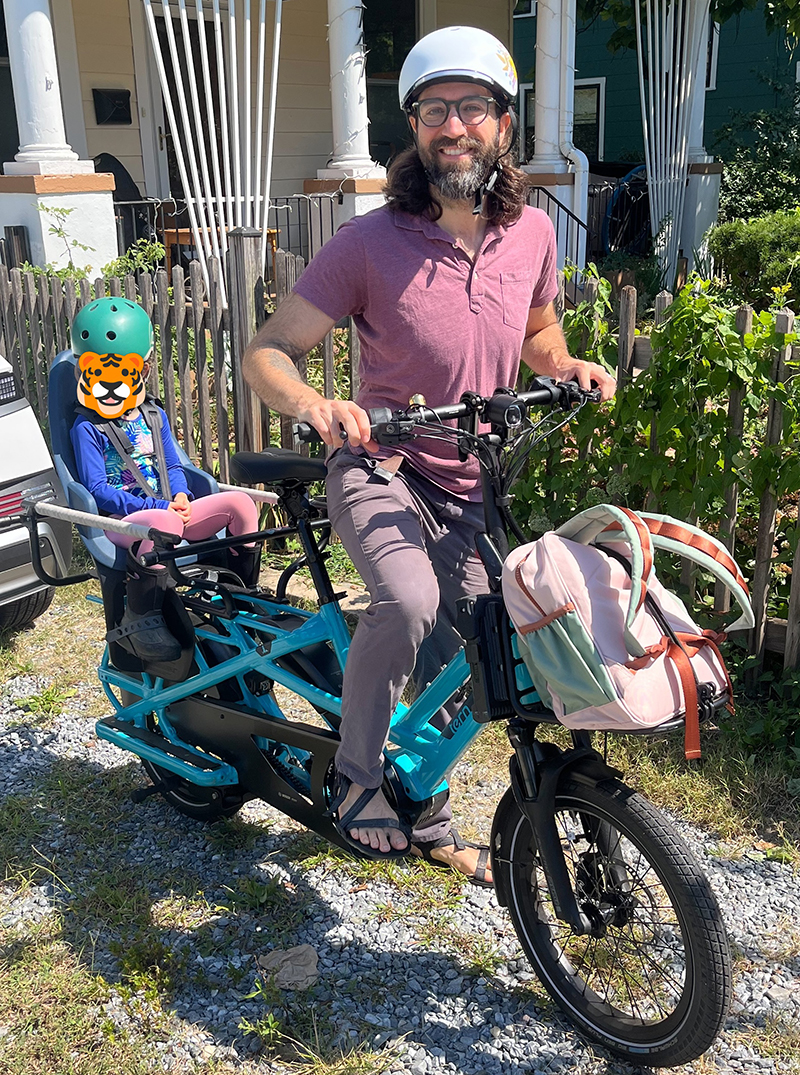
Josh Linden and his daughter on a bike ride
Even so, they must stick to neighborhood streets and the Sligo Creek Trail, careful to avoid Sligo Avenue. Their stretch near downtown Silver Spring has narrow sidewalks and no bike lanes, stop signs or traffic signals, all of which leave cars and buses rushing past with little buffer.
Seeing roads from the seat of a bicycle is one of the perspectives Linden brings to his work, both as a Planning Board member and a full-time professional planner. His career has focused on making it easier for people to get places and afford a home while also helping to mitigate the effects of climate change.
“I want communities that are as welcoming as possible to as many different types of people as possible,” Linden said.
That belief dates back to when, at age 14, his family moved downtown which allowed him to walk to the pedestrian mall in his hometown of Charlottesville, VA, to hang out with friends. He still remembers the thrill of independence.
“I think that started to feed into this interest that I certainly have today, which is, how do we help more people experience ways to get around that don’t involve a car?” he said.
His interest continued to grow after he graduated from James Madison University and moved to Washington, DC, to work in foreign aid and international development.
He donated his car, deciding to rely on biking, walking, or Metro. Different jobs led to bike commutes between DC and Crystal City, as well as Bethesda, and a growing awareness of which roads and intersections felt unsafe. One day, while biking with his wife, a driver crashed into her on a street without adequate protection. While she recovered from the physical injury, the incident had a lasting impact on them. Back then, most of the cyclists he saw were young men and road cyclists with training gear, with relatively few women, older adults, or families — an imbalance he saw as a direct result of streets that don’t feel safe for everyone.
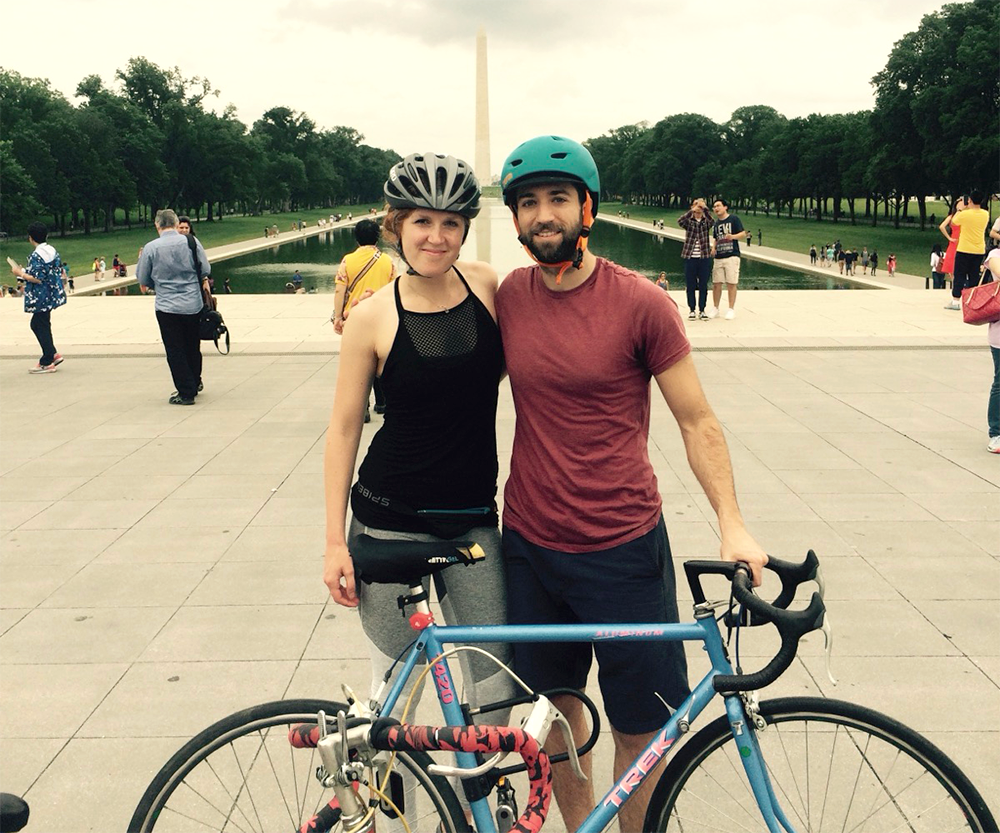
Josh and his wife, Jillian, in front of the Washington Monument
“It had a radicalizing effect on how I think about who cities are for,” Linden said. “People may still need cars, but when biking feels safe and connected – along your entire route – you see more kinds of people riding. That visibility changes the culture and makes communities feel truly welcoming, no matter who you are or how you get around. You can see that change happening in real time across DC, after many years of infrastructure investment. The same is true in some areas of Montgomery County, although there is a lot of work yet to do.”
Meanwhile, he’d begun thinking about a career change. Though he enjoyed helping people in foreign countries, he wanted a stronger connection between his work and local community. After moving to Portland, OR, where his wife attended medical school, Linden pursued a Master of Urban and Regional Planning at Portland State University.
He would soon become a transportation planner for Jacobs, an engineering consulting firm, and later joined Seattle-based BERK Consulting, Inc., where he still works as a planner and housing and climate policy analyst. (He works remotely from his Silver Spring home.)
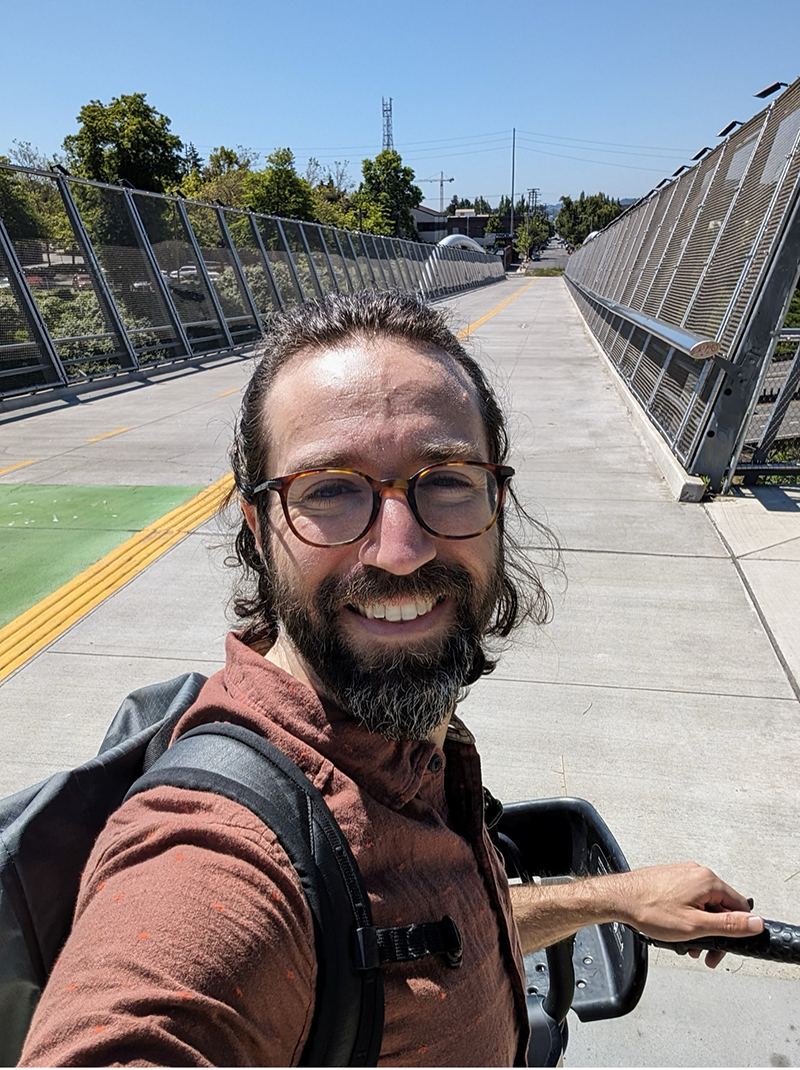
Josh Linden on a bike/pedestrian only bridge in Portland that serves as a key link that connected a greenway over a highway in the city
In 2020, while still in Portland, something happened that would lead Linden to pursue a leadership role in planning Montgomery County’s future: He saw, up close, the catastrophic impacts of climate change.
Oregon suffered one of its worst ever wildfire seasons, with smoke so thick that Linden and other Portland residents had to wear protective face masks to leave home. Forests had been left tinder-dry from higher temperatures and little winter snowpack in the mountains.
In 2023, about a year after he and his wife moved back east, a position came open on the Montgomery County Planning Board. Linden sought a County Council appointment to the board, both to help make his new home more bike- and pedestrian-friendly and to ensure the board prioritized combatting climate change.
“Transportation remains the largest contributor to greenhouse gas emissions,” he said. “By helping folks live closer to the places they need or want to visit, planners can take meaningful climate action.”
He’s now the Board’s vice chair. Before his four-year Board term ends in June 2027, he said, he plans to continue pushing for a greater variety of housing types at different price points throughout the county.
To help the county curb its transportation-related greenhouse gas emissions, he’ll advocate for building more sidewalks, especially near schools and public transportation stops, expanded transit options and adding more protected bike lanes as part of a better-connected bike network.
“Imagine how many more people would come out if we made it feel a little bit safer,” Linden said. “I want us to get to a point where an 8-year-old, an 80-year-old, and everyone in between can feel safe and comfortable biking on a lot of our streets. To me, that would be a win.”
Tim
I’m so glad we have people like Josh on the Planning Board. Safe walking and biking facilities need to be seen as vital infrastructure that is part of every road project and not something that maybe gets tacked on later. There is still a big difference between what many in our local government say they value, and what they actually do.