Imagine, for a moment, that you are in your favorite outdoor place. What things would you expect to see there? Children playing soccer? Tall trees and flowering shrubs? Maybe there is a pond or stream. This place deserves your attention and care.
People love parks. Not only do they provide the benefits of being outdoors, such as improved mental health outcomes, but parks provide a space to gather socially. Think of the very name of this blog, The Third Place – the social realm separate from home and the workplace. “Pocket parks” are one way to ensure equitable access to greenspace, and Montgomery Planning’s Reforest Montgomery program is helping one ambitious and environmentally minded high school student make his a reality.
Green corners for everyone
Max Weiner is working to bring the concept of “Pocket parks” into the mainstream by highlighting its value and potential benefits. He’s a sophomore at Walter Johnson High School in Montgomery County, and as a member of the Student Global Ambassadors Program (SGAP) Leaders’ Sustainability Fellows Program, Max and three other team members created the Green Corners for Everyone initiative to design and build a small-scale public park, known as a pocket park, in Rockville as well as create a guide to help others do the same in their neighborhoods. The team’s project is completely student-run and directed. Max reached out to the Reforest Montgomery program in search of resources, particularly ways to introduce native plant life in his new pocket park.
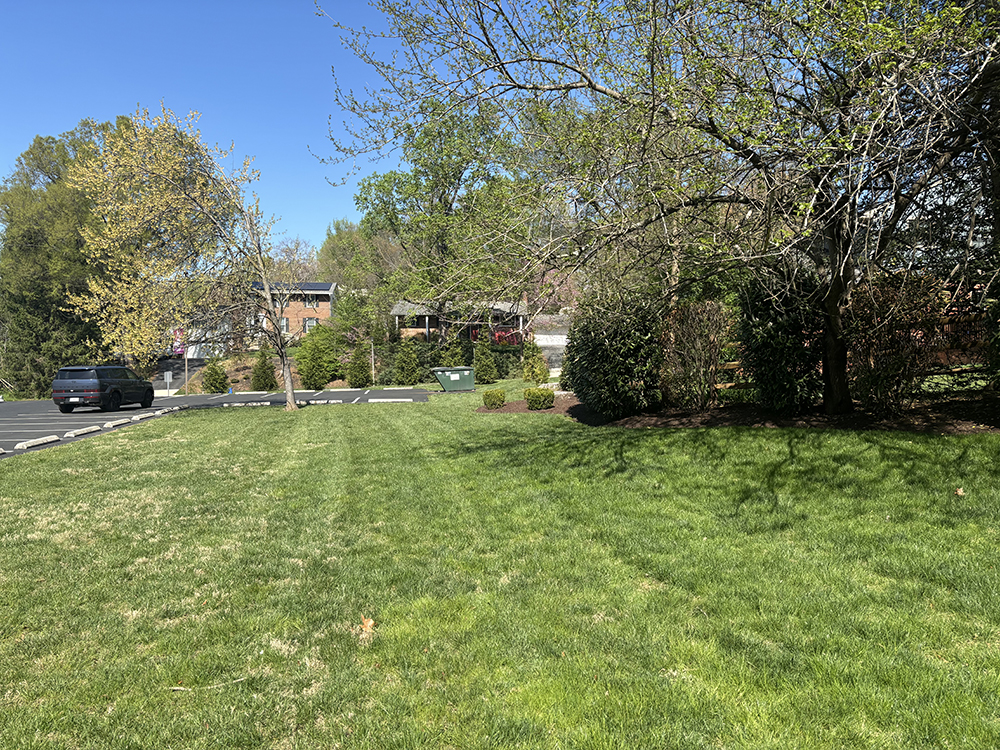
Max Weiner and colleagues conducted a walkthrough of the future pocket park on April 14 in Rockville. The space is currently a grassy plot located at Neighborhood Church. From May through October, on Saturdays, the parking lot adjacent to the pocket park hosts the Derwood Farmers Market for the community. Photo courtesy of Max Weiner
The concept of a pocket park first emerged in Europe after World War II. Large cities had been devastated by the war, and there was little money for repair. Vest pocket parks emerged as low-cost investments that converted small urban spaces into meaningful, natural infrastructure. According to the National Recreation and Park Association, “A pocket park is a small outdoor space, usually no more than one-quarter of an acre…most often located in an urban area surrounded by commercial buildings or houses on small lots with few places for people to gather, relax, or to enjoy the outdoors.” These parks are accessible to their community and are comfortable, sociable places where people can gather and engage with one another.
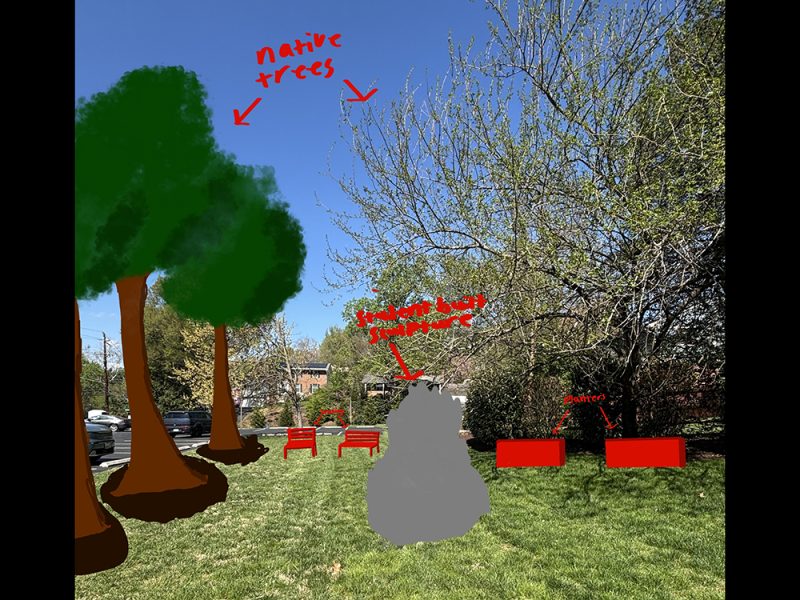
Max loves all things city and design and finds it interesting how the built environment shapes who we are. He said visitors to the pocket park can expect to see picnic tables, exercise equipment, native flora, and perhaps a Little Library, which is what Max wants the pocket park to remind people of—a sweet and functional discovery of shared resources in one’s neighborhood. The team envisions an activated space that also engages local schools and hosts events. Key to getting the team’s initiative up and running is his partnerships with the Maryland Forestry Foundation, Youth Service America, and Montgomery Planning’s Reforest Montgomery program to secure funding and resources, including our native tree coupons to plant trees in his pocket park. The team will also create a guide on how to access funding and construct pocket parks so others—especially the youth of the county—can recreate the initiative. Green Corners for Everyone will host a Community Build Day on Sunday, May 17 from 1 to 5 p.m. with a rain date of May 23 to build the first pocket park together at 16501 Redland Road, Rockville, MD, in the lower parking lot near the patio. The Green Corners for Everyone team is inviting community members to join this effort (and to connect with them on their Instagram account).
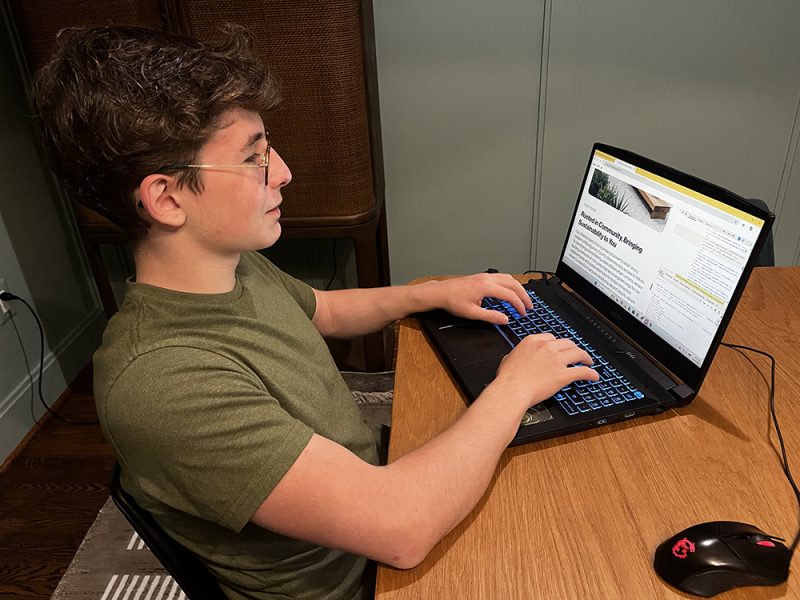
 Max Weiner, a sophomore at Walter Johnson High School, works on the Green Corners For Everyone website, which emphasizes that this community-driven movement is dedicated to transforming overlooked urban spaces into vibrant native mini-parks. Photo courtesy of David Weiner
More greenery is the goal
Since 2023, the county’s forest conservation law requires no net loss of forest. This means that on aggregate, the amount of forest planting and protection must be greater than or equal to the amount of forest cleared through development projects. The Reforest Montgomery program helps Montgomery County meet this requirement.
Reforest Montgomery’s native tree coupons help cover $50 per tree and can be combined with a state coupon to total $75 per tree. From July 2024 to June 2025, over $61,000 were provided for native trees. Max’s native tree coupon will be one of nearly 700 coupons that have been used since July 2025. Adapted to the unique environmental conditions of Montgomery County, the eligible native trees often require less maintenance than non-native and offer high quality habitat that supports pollinators and other local wildlife. In addition to supporting the local ecology, native tree coupons support Montgomery County nurseries, encouraging investment in the local economy.
The Reforest Montgomery program is inherently collaborative. Our reforestation and planting programs all rely on partnerships with Montgomery Parks, Montgomery County Public Schools, Montgomery Countryside Alliance, and property owners who receive tree plantings. It is a joy to know that our programs can be used organically to support community grassroot efforts. Projects like Green Corners for Everyone connect Montgomery Planning goals with community planning initiatives.
When I was an environmental educator, a major part of my work was celebrating “nearby nature” in the communities where I served in Washington, D.C. When I would prompt youth on ways they could help the environment, they would often say, “save the sea turtles.” Their idea of nature, green spaces, and the environment in general was elsewhere, far from where they lived and learned. Local green spaces are often overlooked for stewardship. Creating a pocket park can help bring wonder to one’s neighborhood and increase the ecosystem services of native plant life.
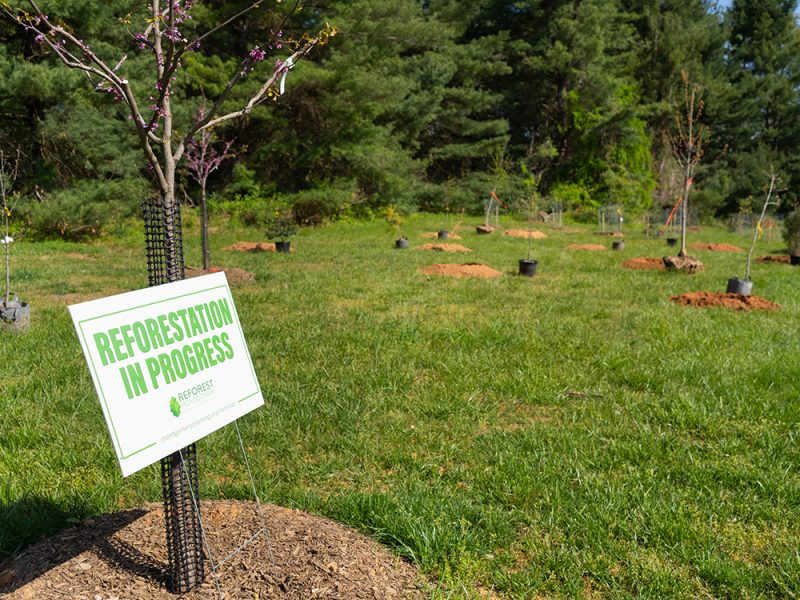
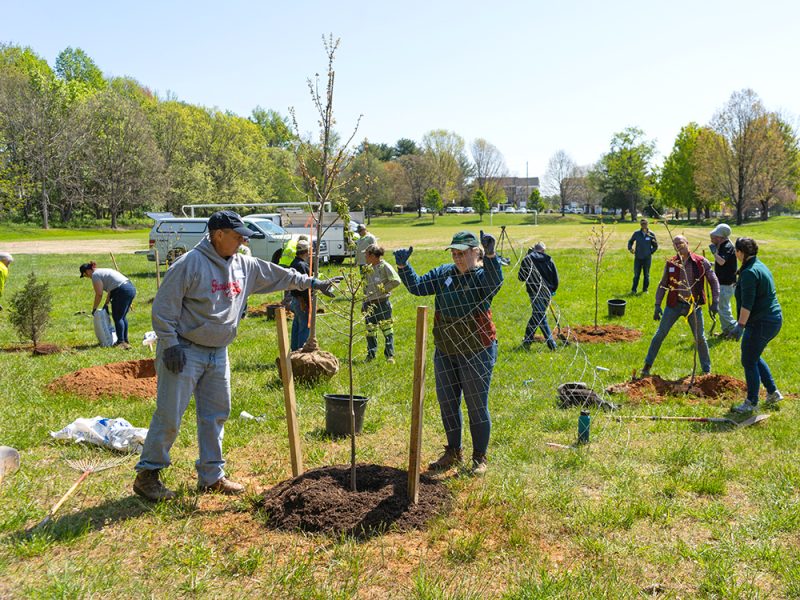
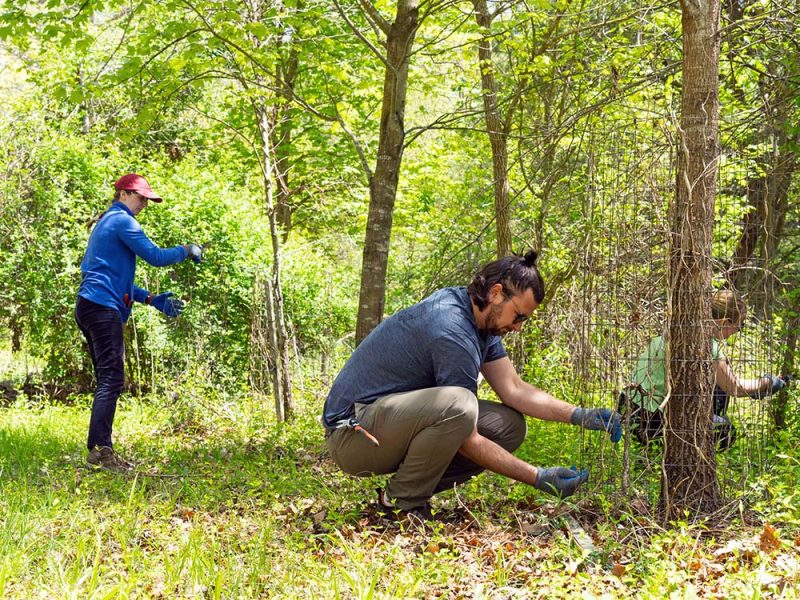
- In 2024, Reforest Montgomery planted native trees in the Watts Branch Stream Valley Park area of Potomac. Watts Branch Stream Valley encompasses nearly 438 acres and protects the Watts Branch, a tributary of the Potomac River.
About the author
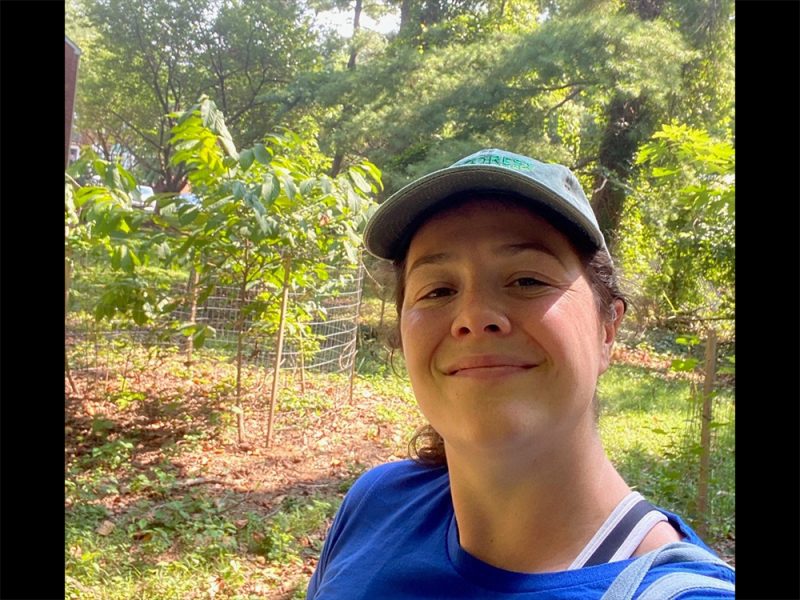
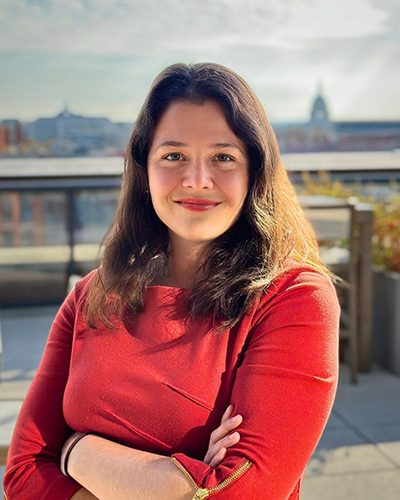
Kelsey Desmond is a Forestry Conservation Planner in Montgomery County and brings with her ten years of urban forestry, environmental education and community development experience. Through her reforestation projects, she seeks to restore ecosystem services by planting trees and shrubs but also instill a sense of wonder and connection with the natural world for communities. In her previous role, Kelsey has overseen K-12 outdoor education programs and a regional school tree planting program. She is a steward for the local forests and cultivates profound relationships between humans and their local ecologies.
Sonia G.
Absolutely love this idea and so happy I read an article about this effort! We’ll try to join in as volunteers.