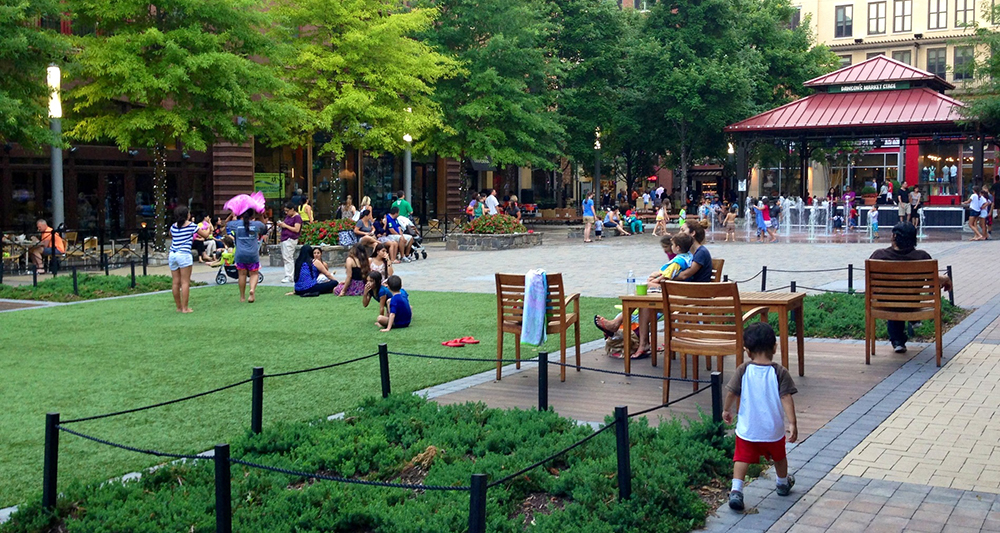
According to Mike Hathorne, author of The Great Housing Reversal, neighborhoods, towns, and cities that offer smaller housing choices, and are smarter and well connected and accessible to more people of all generations, will be our future American dream.
An insightful new lens for understanding the country’s housing challenges comes from “The Great Housing Reversal and the New American Dream,” a compelling book by Mike Hathorne. Hathorne argues that the United States is not experiencing a temporary housing cycle but a lasting structural reversal. For decades, our housing system was built around a single dominant household type: married couples with children buying a detached home on a large lot in the suburbs. That model shaped zoning, financing, and the very idea of the American Dream.
Hathorne suggests that younger generations are prioritizing connection, belonging, and proximity over large houses and big yards. They want to live near people, places, and experiences. Empty nesters increasingly want to downsize into the same thing. The problem is that our housing supply and the types of housing, zoning and financing has not caught up, and that is clearly playing out in Montgomery County.
My wife and I are empty nester baby boomers who live on a large residential lot in Silver Spring that is well connected to the Sligo Creek Park system, but a bit too far to walk to the amenities that we love, like a local coffee shop, restaurants and even a dry cleaner.
Downsizing has always been a goal of ours, but the cost of a smaller house or condo within walking distance of amenities within our close-in neighborhoods is dramatically more expensive than what we would get for our lovely house adjacent to the park. I’m not complaining, but less yard and less house for the two of us in a walkable neighborhood would certainly be ideal. This is a problem that many young and old alike face in our region – how can any generation buy into the great, walkable, mixed-use communities of Montgomery County today? Sadly, most can’t.
The demographics of our county, region, and country are changing significantly but unfortunately, the variety of housing types within our communities, particularly at our many centers, is not. The types of housing being created today in Montgomery County are primarily single-family houses greater than 3,500 square feet, multi-story townhouses at 2,300 square feet or larger, and luxury apartments. Most of these do not meet the needs of younger first-time home buyers or older empty nesters, who often want to stay in or near their family’s neighborhoods. Current residential zones with large minimum lot sizes have essentially made purchasing a house in the county too expensive for most and the housing alternatives that younger generations want, illegal. There are almost no affordable, smaller starter homes available anywhere near our thriving neighborhoods.
This is what we know today throughout Montgomery County and the nation:
- 20% of county residents are now 65 or older. This is up from 10% in 2000.
- Household sizes are now 2.67 people per household, which is dramatically less than 3.54 people in 1950, even though the county’s population continues to grow.
- The county’s average age of first-time homebuyers is now over 40 years old, when in 2000, that age was just over 30 years old.
- Over the past 20 years, the county has lost almost 6% of its middle-income demographic. Many have left due to the high cost of living driven by the high cost of our housing inventory.
- AARP states that nationally, 80% of all households are not traditional nuclear families anymore, with 53% of all households containing two people or less.
- In 2000, the average home was sold every nine years in Montgomery County. By 2020 the same homes took fifteen years, on average, before they changed hands. This is a supply problem for growing families who can afford a larger home and for those who own a house but can’t afford to move.
- AARP states that 78% of all people over 50 years old want to stay in the community where they raised their children.
- The National Association of Realtors states that 58% of all people want to live in a neighborhood that has a mix of houses, stores, and other businesses within an easy walk.
 This new duplex in Washington, DC provides two attached homes within a block from Connecticut Avenue. It also looks like a single-family home from down the street.
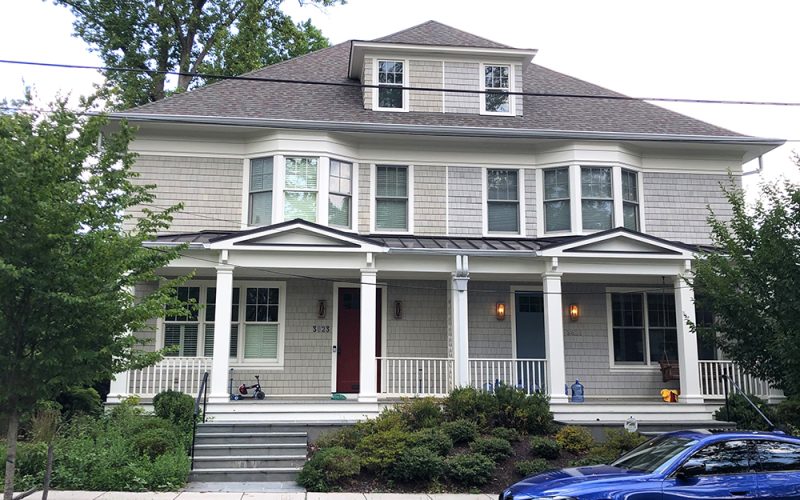
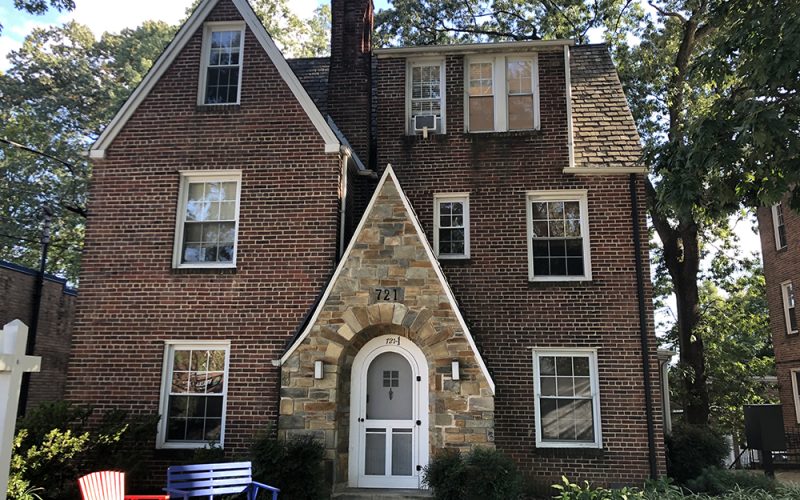
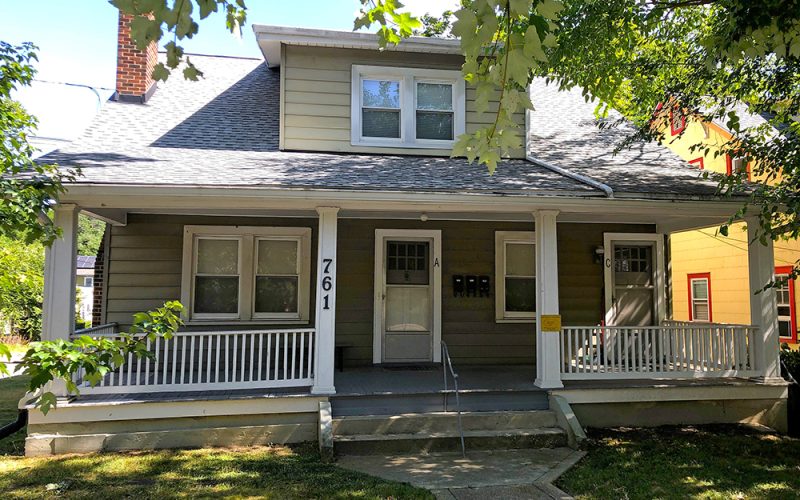
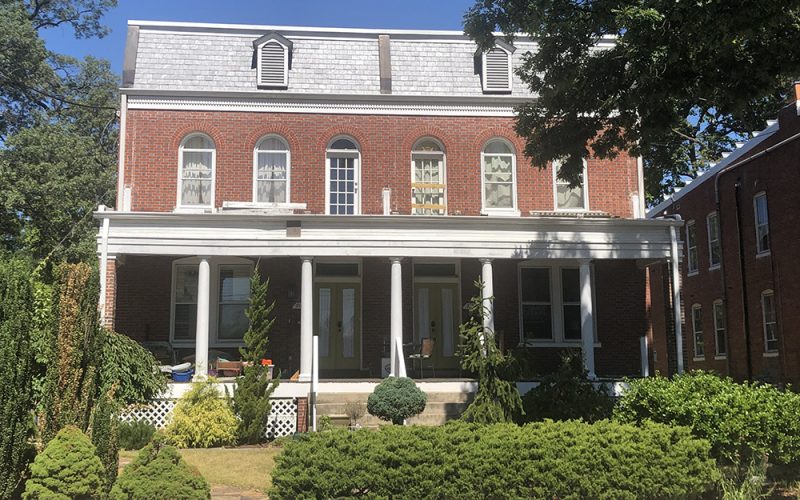
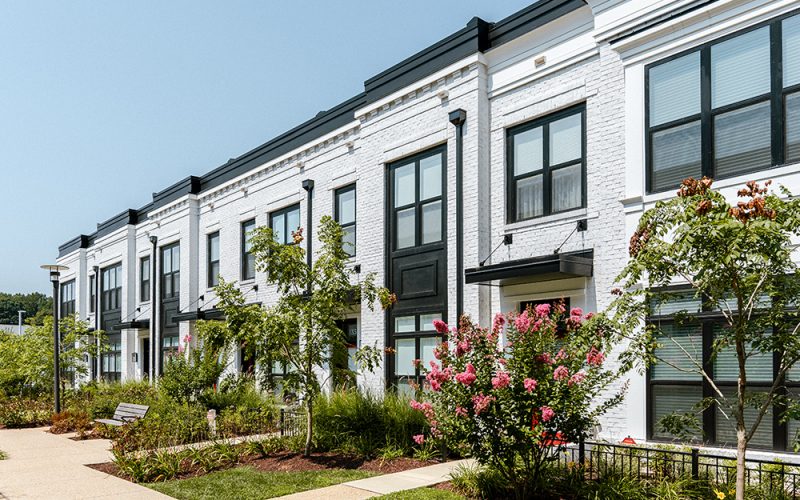
The dramatic shift in demographics from the baby boomer generation to Gen X, millennials, and Gen Z, shows quite clearly that we are not creating nearly enough housing for these changing generations. Thrive Montgomery 2050 suggests a “more of everything” approach to address this problem. Adjustments to our zoning, and the creation of a variety of historically common housing types such as duplexes, cottage courtyard housing, small apartment buildings and “granny flats”, and others, are also necessary to start to meet the needs of our ever-changing county.
Hawthorne believes that our country’s current housing product mix is misaligned, and a shift needs to occur for our communities (including Montgomery County) to thrive. He offers a blueprint for realigning housing with demographic reality. This suggests that adaptation is the means for solving our housing shortage while maintaining household wealth and community prosperity.
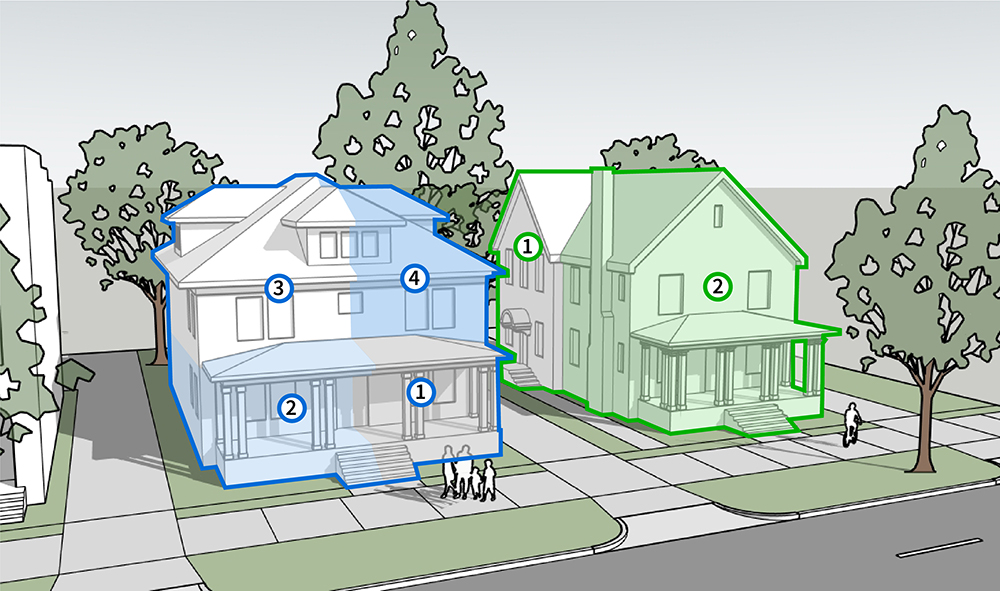
This diagram sketch shows how new or renovated two and four unit homes can fit within a single-family neighborhood in an existing community. These homes can create the connections sought by younger generations who want to buy into walkable neighborhoods within the county.
In some ways, Montgomery County has already started this shift through master plans that promote street-oriented, mixed-use, and walkable neighborhood design. But to truly get to the new neighborhood paradigm, Hawthorne writes that there needs to be a change in civic DNA by reforming zoning restrictions, reducing frontage and parking requirements, maximizing housing types and street design standards, and reforming financing norms and appraisal assumptions that treat proximity as a threat rather than an asset.
As our country’s demographics continue to change, the author proposes a housing reversal is necessary. In many ways, Thrive Montgomery 2050 provides us with an outline of where we, as a county, want to go. The Great Housing Reversal and the New American Dream, offers the details on how to get there.
This blog post is not an endorsement by Montgomery Planning of the book and/or the author.

About the author
Paul Mortensen is the Senior Urban Designer in the Director’s Office at the Montgomery County Planning Department and leads the Design Excellence program. He is a registered architect in California, Washington, and Maryland, is a LEED-Accredited Professional, and is a member of the Congress for New Urbanism. Prior to joining Montgomery Planning, Paul was the lead designer and master planner for several nationally recognized firms on AIA and CNU award winning developments throughout the country.
Michael Gurwitz
The illustration in this post depicts the presence tall trees in the front and, especially, backs of both the duplex and quadruplex. This is misleading, as it is very likely not what would happen on many lots now occupied by a detached single-family home. Tall, mature trees exist in the backyards of detached single-family homes because they have the space above and below, for their root systems, to have matured and grown large. If one takes into account the bigger footprints of duplexes and especially triplexes and quadruplexes, and adds in the inclusion of on-site parking, which will occur because many neighborhoods already lack sufficient street parking, then the outcome will be the destruction of existing tall trees and covering-over of the yards on which they existed with larger buildings and their parking areas. At best, a few small decorative trees might be planted in what is left of the back or front yards.
Too many parts of Montgomery County suffer from a lack of sufficient large tree canopy, which is more important than ever in a time of global warming. Large trees have already been lost to both development, and invasive vines and insects. The health and environmental benefits of large tree canopies are immense and necessary, and Montgomery County must do all it can to preserve its number of large trees.
Paul Mortensen
Thank you for your comments. We agree that a goal within the county should always be to save as many mature trees as possible within neighborhoods. They are great for the environment and add tremendous economic and environmental value to a home and neighborhood. By code, property owners are required to plant large species trees to replace those that are taken down when a new development occurs on a lot. The type of housing this post, and the book suggests, could be accomplished in a couple ways. 1.) the renovation of an existing house into multiple units – say a duplex or triplex, which saves the existing house and could save existing trees on a lot, and 2.) the replacement of a smaller house for a multi-plex home such as a duplex or triplex instead of a large single-family mansion that maximizes lot coverage and could take out existing trees. In both cases, residential zoning would not allow additional lot coverage than what is allowed in the zone, except for the addition of more parking on site. New single-family homes, instead of multi-unit homes are being built in more established neighborhoods of the county and many trees are being removed and then replaced with new trees that will grow over time. The drawings shown in this blog post are intended to show trees in more maturity over time. Thank you again for your comment.