Community
MontgomeryModern explores mid-century modern buildings and communities that reflect the optimistic spirit of the post-war era in Montgomery County, Maryland. From International Style office towers to Googie style stores and contemporary tract houses, MontgomeryModern celebrates the buildings, technology, and materials of the Atomic Age, from the late 1940s through the 1960s. A half century later, we now have perspective to appreciate these resources as a product of their time.
If you read my previous post for Historic Preservation Month, you know that in picking a theme for this year’s Preservation Month, the National Trust for Historic Preservation issued a challenge to people in communities across the country to discover hidden gems and celebrate local historic resources. Montgomery County historic preservation planners responded by preparing a list of historic resources we hope you will discover.
While Preservation Month has become a fun annual event to raise awareness and celebrate historic preservation nation-wide, our exploration of the county’s historic resources will continue long after we turn the page on May. Our efforts have led us to look beyond what many people recognize as historic, and to start thinking about buildings and places from a period of our history that historic preservationists have only recently begun to consider.  Not long ago Montgomery County historic preservation planners launched a new initiative to study local mid-20th century modern buildings and communities, part of an effort we call MontgomeryModern. The historic value and design significance of the mid-century era — the 1940s through the 1960s — has, until recently, been largely overlooked. But as more than 50 years has passed since these buildings and communities were constructed, we have begun to investigate their historical, cultural and architectural importance.  As a result of a more complete understanding of these mid-century resources, property owners and decision-makers may find more of these resources appropriate for historic preservation.
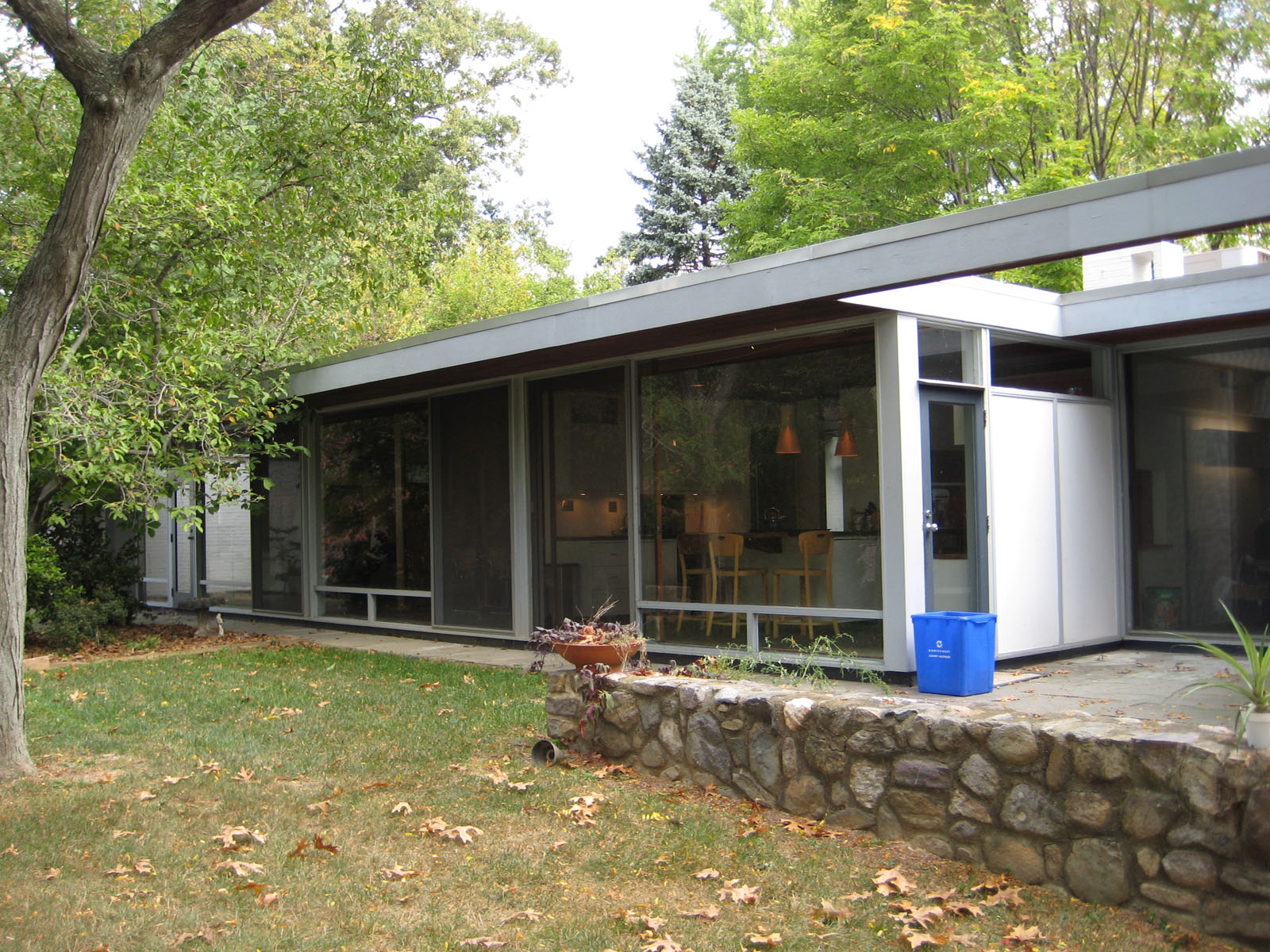
MontgomeryModern is exploring mid-century modern buildings and communities that reflect the optimistic spirit of the post-war era in Montgomery County, Maryland. Preservation planners want to help raise the public’s understanding of – and appreciation for – these buildings and communities developed during a time of tremendous growth in Montgomery County. To encourage your discovery of mid-century architecture we included four Modernist buildings or communities in our Preservation Month list of Montgomery County gems. Carderock Springs, a community of 275 houses designed by Keyes, Lethbridge, and Condon and developed by Edmund J. Bennett between 1962-1966, is listed in the National Register of Historic Places.
Also listed in the National Register is Rock Creek Woods, a 76-house development that is one of several in Montgomery County by regionally prominent architect Charles Goodman. World-renowned architect Marcel Breuer designed the International-style Seymour Kreiger House in Bethesda. The Kreiger House, built in 1958, is listed in the National Register and is designated in the Montgomery County Master Plan for Historic Preservation. The WTOP Transmitter Building, built in 1939 in Wheaton, is also a landmark modernist building that has been designated in the Master Plan for Historic Preservation.
The intent of including in our list these four historic resources is to give you a taste of the remarkable mid-century modern buildings and communities we have in Montgomery County, and to encourage you to investigate our MontgomeryModern initiative as we learn more about hidden gems from the mid-century.
learning with legos at NBM

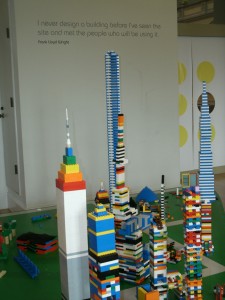
"I never design a building before I've seen the site and met the people that will be using it." Frank Lloyd Wright
The ongoing Lego (R) exhibit, Towering Ambition, at the National Building Museum has some very cool models of famous buildings, but also provides a play area for kids and families.

More interesting than the models, however, are the prompts about land use and community planning hanging around and adorning the space where kids (and adults) can play with the Legos.
Rather than focus on cool buildings, like the exhibit, these prompts ask budding designers to think about places beyond the bounds of an individual building, to think like a town planner (and a rather progressive one at that).
- Unfortunately the prompts still relegate land uses to separate building forms, but do suggest locating them near one another.

If not integrated uses, at least mixed-use planning. Basis of an interactive civics curriculum on planning?
I think their next exhibit should be reproductions of great plazas, parks, and streets!
Place-making art; art-making place
Seattle’s Downtown Transit Tunnel was designed as a collaborative project between the project consultant (Parson Brinckerhoff Quade and Douglas Inc.), the architecture subconsultant (TRA), and 25 artists. The team created what they have termed a distinct “art-itecture” for each station representative of the neighborhood it serves.
The result is a fantastic model for the stations along the proposed Purple Line and the Corridor Cities Transitway.
Even after just a couple days riding the light-rail or buses through Seattle’s stations, a quick glance out the window provides a distinct impression that tells, or shows, where you are. The collaboration is obvious in the integration of artistic details and the creation of a place. You feel that the design process was a conversation – between the place informing the design of the art and the art and architecture reinforcing the sense of place.
Signage and practical information is kept consistent; station logos are modified, but from the same graphic language; and safety is served through varied applications (such as paving, bollards, etc) of similar techniques.
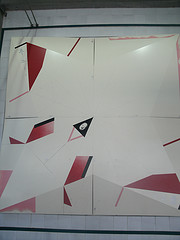
One of my favorite artworks is in the International District Tunnel Station by Sonya Ishii — a grand gesture spanning almost 150 feet along the eastern wall.
This work is a set of nine, 14-foot by 14-foot aluminum panels at various folded stages in the creation of two origami figures. The panels begin virtually flat and end up 2 feet deep to accommodate the folds. One reads from left to center, the other from right to center (as pictured, the top photo is the left).
The heaviness and size of the steel is appropriate for the size of the station and, in this context, actually feels as light as traditional washi origami paper. The colors are simple and bold (not unlike the totem figures of the northwest Native American works that dominate the Seattle art scene).
In all, the work is derived from the place – an international art form in the international district, while helping create a sense of place – “get off the bus at the station with the huge origami figures” (and I bet a first time visitor could pick the station from a random list of all the stations…). This place-making art draws from the uniqueness of the place. It wouldn’t be a stretch to call this an aesthetic example of the dialectic synthesis, as the philosopher would call it, and a model for civic art.
Communities invest in places that reflect and reinforce their sense of self; the artist and design team can bring new perspective and form to that sense. We would be wise to learn from examples such as this before our plans for the Purple Line and the CCT get too far down the, ahem, line.
On communities having more input. Not sure I’m down with the program advocated in all – or even most – cases. But important for particularly important locations and projects, e.g., civic buildings and open spaces.
An example of the grassroots process advocated above that did work:Â Paint Your Faith.
On artists taking to the streets. But what isn’t more fun in Rome?
Share something in your local park. This is what the right to assembly is all about – knowledge pursued in public spaces.
Last, as if Rybczynski didn’t explain why our cities aren’t like Europe’s well enough – we’re still experimenting with ways to integrate bike transportation.
A Vision for Long Branch
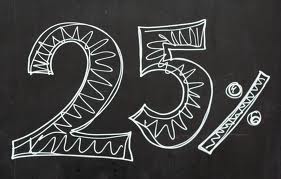
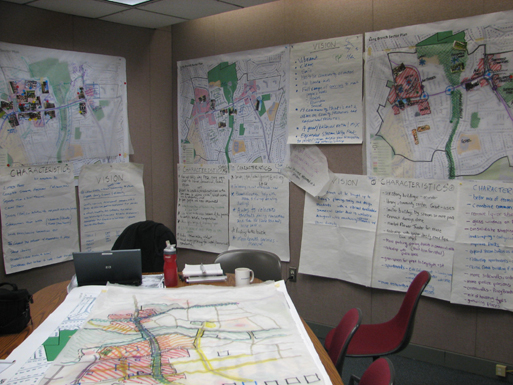
Wednesday night, planners held a community workshop and guided about 25 residents in using visual building blocks to express the characteristics they’d like to see in their community. The future Purple Line stations will change the neighborhood’s character and opportunities. This workshop and upcoming workshops are a chance for the community to define its future.
They began with maps, markers, and photos—the visual building blocks—and after talking about what they want their community to be—a place where you can walk to a hardware store or ride your bike to the park, they started to put their ideas on paper.
Planners Kathy Reilly and John Marcolin said the people here know their community and all its issues, an even though there was some skepticism, by the end of the night, everyone had their hands all over the maps.
The workshop was an effort to ensure that community views shape the plan’s recommendations. The maps and pictures they created are just the physical expression of their knowledge and ideas.
Next Wednesday, April 28, at the Long Branch Library, planners will bring back the ideas, which they will have distilled into possible development scenarios and areas of common vision. From tracing paper to pavement, this is where the plan begins.