
By Montgomery Planning staff
While attending the University of Texas at Austin in the early 2000s, James Hedrick witnessed what happens when a city’s population growth outpaces its housing supply.

James Hedrick while attending the University of Texas at Austin
Austin, already tight on housing, was booming with new tech companies–and the high-paid workers who followed. As rising rents left more residents unhoused and forced others out of lower-income neighborhoods, Hedrick joined the local mayoral campaign of Max Nofziger, which was centered on the city’s affordable housing crisis.
“People have got to live somewhere,” Hedrick said. “If you don’t plan for and provide the amount of housing that you need, it’s the community that suffers.”
While his candidate lost, Hedrick would go on to devote his career to providing more types of housing for people at all income levels. His resume includes work for the U.S. Department of Housing and Urban Development (HUD). He’s now executive director of Rockville Housing Enterprises, which provides affordable housing and issues federal rent vouchers for Rockville’s lower-income residents.
Previous to becoming its executive director, Hedrick served on the Rockville Housing Enterprises board for about 10 years. During this time, Hedrick said, he saw how construction of affordable housing was severely limited by land use policies. Too few places allowed for new apartments or townhouses, even those proposed by nonprofit and mission-driven developers.
It’s why, in 2023, he sought a Montgomery County Council appointment to the Montgomery County Planning Board—to make it easier to build homes for people of all incomes.
Without changing zoning, Hedrick said, “At some point you realize that you’re stuck.”
Hedrick first saw people struggle to afford high-quality housing in a rural area of central Texas, where he grew up—the son of two public school teachers. His home was surrounded by pastures of goats and sheep, about halfway between Dallas and Houston.
“It was as far from an urban area as you can get in Texas and still be east of I-35,” he said.
The closest school was 12 miles away, in the small town of Franklin. There he saw rural poverty, including a 1960s-era public housing complex and homes that were overcrowded or poorly maintained.
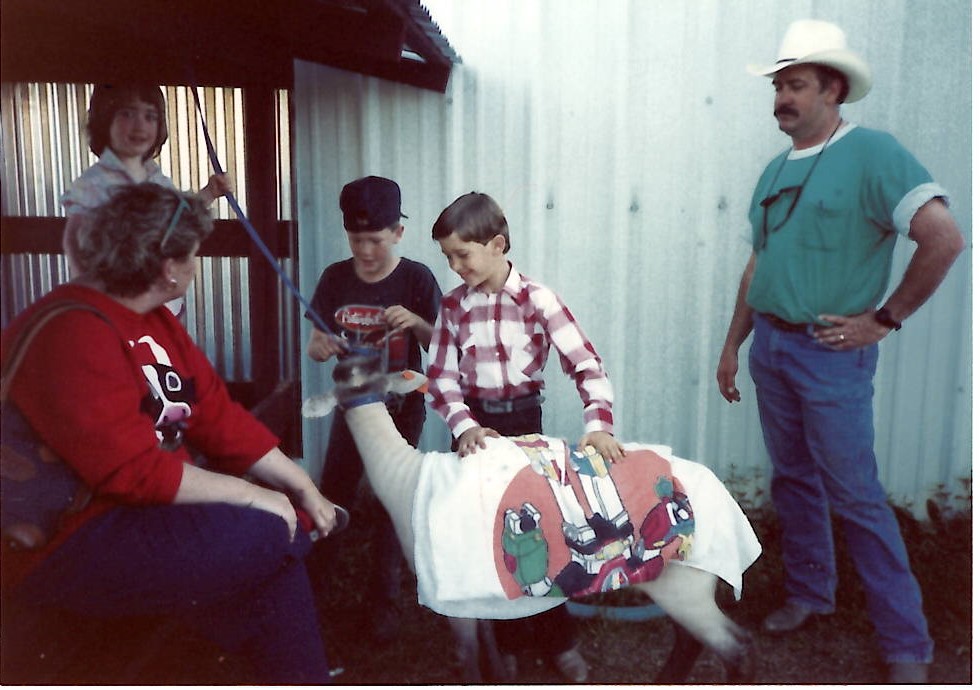
James Hedrick (second from the right) with his family at the Robertson County Fair in 1991
After college, Hedrick moved to Washington, DC, to work for the National Council of Agricultural Employers, focusing on immigration issues affecting farmworkers.
Later, at HUD, he reviewed grant applications for the Rural Housing and Economic Development program. His work took him to economic development projects across the country, from an oyster farm in Alaska to a small business incubator on the Arizona-Mexico border.
“It’s amazing what people manage to do with the resources they have and with what’s available in their area,” he said.
Along the way, he earned Master degrees in political science from American University and Rice University, where he also earned a Ph.D. in political science and government.
Since joining the Montgomery County Planning Board, Hedrick has worked with other commissioners to ensure that communities’ master plans prioritize affordable housing, including by changing zoning to permit more multi-family housing in more places.
Looking forward, Hedrick said he’d like to see Montgomery County invest more in its Housing Opportunities Fund, which provides short-term loans to developers that buy and preserve affordable housing.
“In a county of 1.1 million people, we need about 4,000 to 5,000 new units constructed per year, of which the majority should be affordable,” Hedrick said. “We’re not even close to that and haven’t been for a while. Affordable housing in the county just needs astronomically more investment.”
He’d also like to see the county establish a public bank to finance affordable housing projects and change zoning throughout the county to allow for small apartment buildings, duplexes and other “missing middle” housing types in areas now restricted to single-family homes.
Hedrick lives in the Twinbrook area of Rockville with his wife Rachel and their three children, ages 4, 8, and 11. In addition to spending time with his family, he enjoys playing the drums with friends, even though that doesn’t happen often.
“I live the life of a middle-aged suburban dad,” Hedrick said. “I’m usually at work, driving one of my kids somewhere, or at the planning commission.”
Leave a Reply