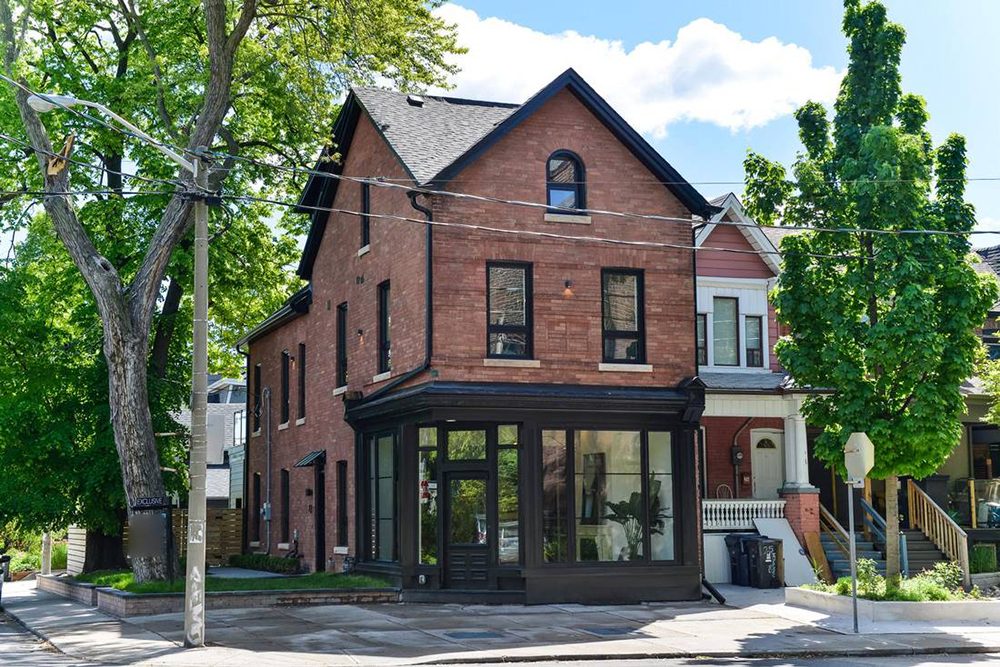
A corner store on the first floor of this home thrived for decades in this tree-lined residential neighborhood in Toronto. Photo credit: Atul Sharma
One of the fondest memories I have as a young child was visiting the corner store a few blocks away from my grandparents’ house in Iron Mountain, Michigan. My brother, sister and I would walk down the tree-lined street to the store without our parents, exploring the neighborhood and feeling cool and independent in search of an ice cream cone or an ice-cold Coke. The store was on the first floor of a Victorian house on the corner of two residential streets with a front stoop, a couple signs dangling down and an apartment upstairs. Everyone walked to the corner store except for a couple of people who drove up and parked out front to grab a loaf of bread and some ice-cold drinks. This corner store was “The Third Place” within the community. It was the heart of the neighborhood and when you entered, the lady behind the counter always said, “how ya doin’?” in that upper peninsula accent with a smile. Our grandparents never worried about us because they knew that their neighborhood was always watching out and would take care of us. It truly was a complete community!
Today there are only a few corner stores in Montgomery County. They exist because they were either grandfathered in (they predate modern zoning that began in the 1930’s and 40’s) or they were programmed into a master planned development. Euclidian residential-only zoning has made corner stores illegal in our residential (R) zones and the image of an industrial-looking convenience store with parking lots in front has further tarnished the corner store image as a wonderful contributing third place use within our residential neighborhoods.
Corner stores, cafes and small shops are permitted in mixed-use higher density (CR) zones which only account for 2.8 percent of the county’s land. Today, they are also difficult to develop without an enthusiastic owner, some initial subsidization, and/or good marketing from local jurisdictions or developers. But their clear function as a gathering place – or Third Place – and vital amenity within our single-family and townhouse communities cannot be denied. Third places are how a walkable, mixed-use neighborhood becomes real instead of aspirational.
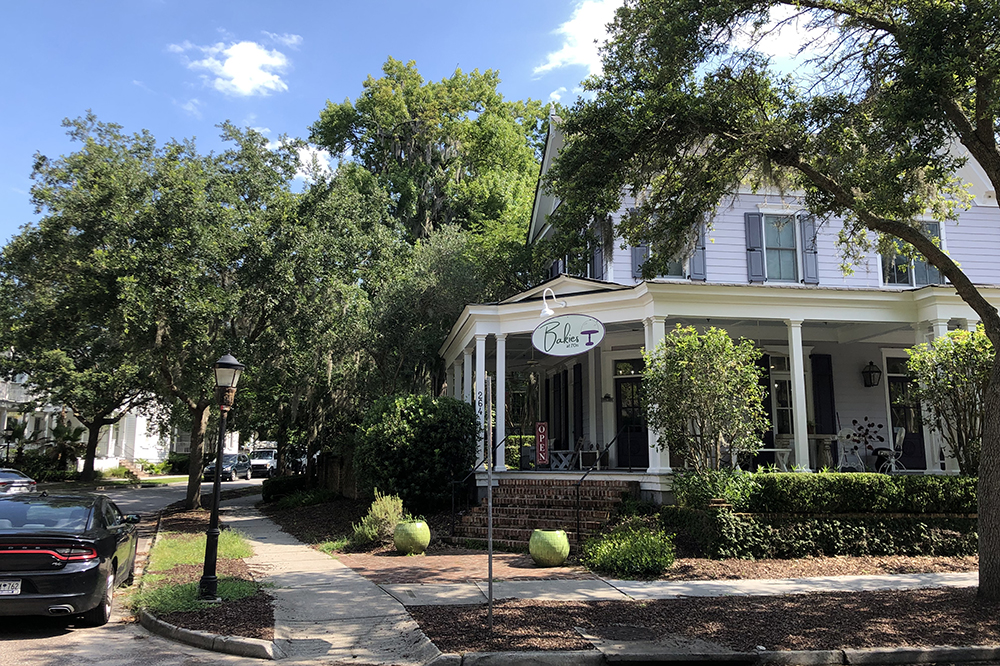
I’On, near Charleston, SC is a new urbanist community, similar to Kentlands, Md., that features this corner bakery in the middle of the residential neighborhood. The store with its porch is an active third place for residents. Photo Credit: Paul Mortensen
The corner store building type, that most often looked like a home or townhouse with street-level windows and fronts at the sidewalk, were anchors in many thriving urban neighborhoods across the country. Community life revolved around these markets and cafes. They existed everywhere which encouraged healthy walking that supported neighbors meeting each other. Social inclusion and safety were baked in.
During the pandemic, having a corner store would have been a tremendous and convenient benefit for most of us, by knowing we only had to walk a few blocks to get necessities and some exercise while avoiding large grocery store crowds.
Corner stores in communities offer a great deal. They start by bringing neighbors together –promoting social interaction. They also reduce auto dependency and redundant car trips on neighborhood streets, which reduces auto emissions and pedestrian/auto accidents. They can promote health by encouraging walking and offering food security with healthy options. They can also become economic engines that benefit local neighborhoods and entrepreneurs. Corner stores can also offer café seating for those who want to eat a deli sub, consume an ice cream cone or just watch the beautiful day go by.
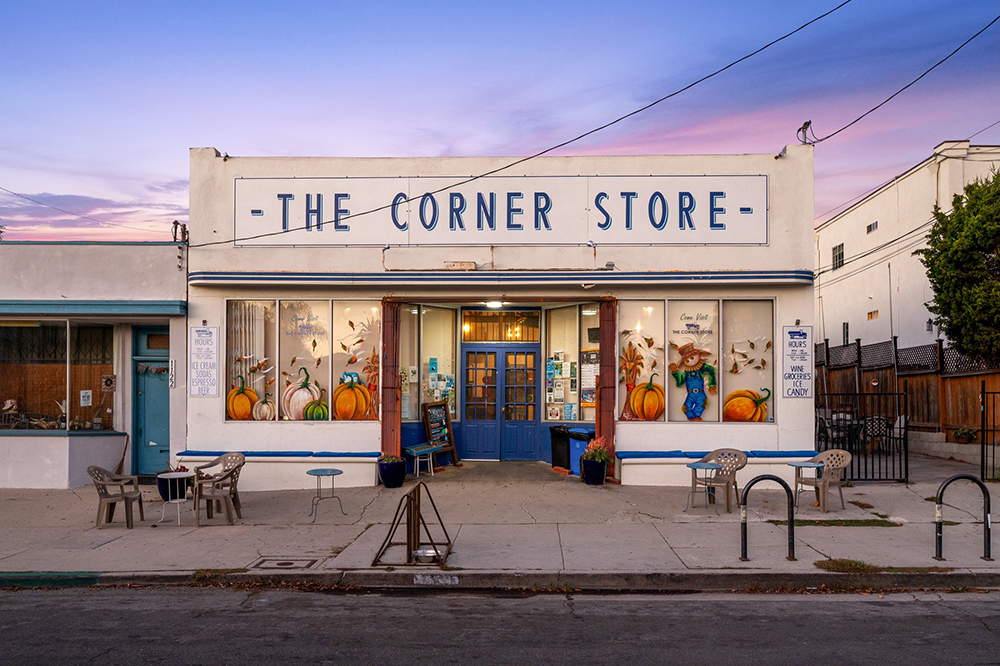
The Corner Store is a historic cafe and “the third place” in a neighborhood of San Pedro, CA. Since 1947, it’s served residents food and drinks and often hosts live music and other community building events. Photo Credit: TheCornerStoreSanPedro
Thrive Montgomery 2050 states that complete communities are places that include a range of land uses, infrastructure, services, and amenities that allow them to meet a wide range of needs for a variety of people. The framework also strongly encourages walkable communities that foster less driving. If our residential zones were updated to allow a certain number of additional uses within neighborhoods and corridors, we could maximize their attractiveness and make them more complete and walkable. Not all neighborhoods are dense enough to sustain a corner store. But for those that can, why not allow a “house-like” corner store that can support a more vibrant community. Corner stores can make single use, detached home or townhouse neighborhoods more complete. They are the Third Places that can help make a simple neighborhood a more equitable, socially engaging community. They are not just nostalgic. It is time to allow corner stores in all residential zones in Montgomery County to help make our community thrive.
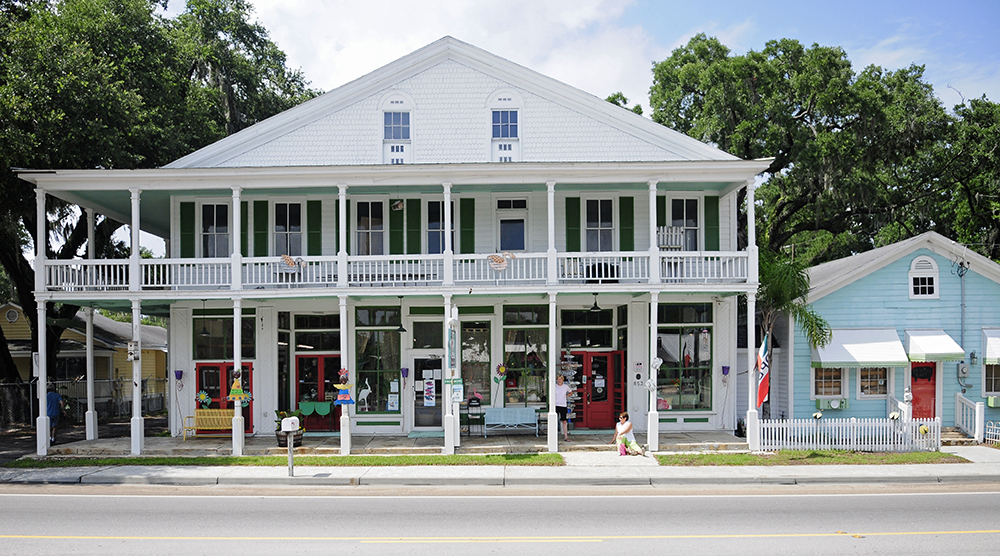
The Corner Store with an office above serves residents in this walkable single-family neighborhood of St. Helena Island in South Carolina. Bill Fitzpatrick, The Corner Store and Office, CC?BY?SA?3.0, via Wikimedia Commons.

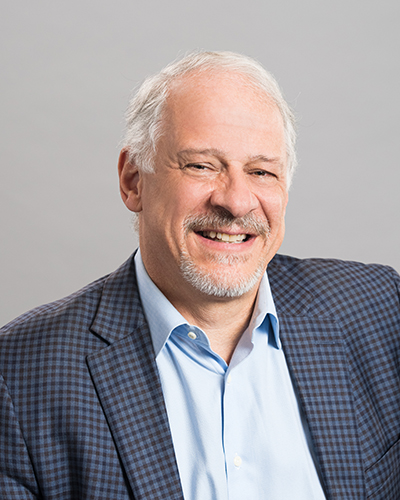
About the author
Paul Mortensen is the Senior Urban Designer in the Director’s Office at the Montgomery County Planning Department and leads the Design Excellence program. He is a registered architect in California, Washington, and Maryland, is a LEED-Accredited Professional, and is a member of the Congress for New Urbanism. Prior to joining Montgomery Planning, Paul was the lead designer and master planner for several nationally recognized firms on AIA and CNU award winning developments throughout the country.
Alan Davis
While nostalgia may be appealing, it is not the Planning Board’s job to implement their personnel ideologies over the overwhelming opposition by majority of citizens who are affected by ill conceived ideologies and a one size fits all approach to land use and zoning. We have seen time and again where the wants of a community are being ignored for the sake of fantasy (nostalgia included) ideologies that our communities don’t want or need.