Note: This archive page is no longer updated and may contain out-of-date information.
…is paved with brick, “special” light poles, custom garbage cans, and light pole banners. You don’t need to be a keen-eyed tracker to read the signs–planners have been here.
But are special materials necessary to create a good design or great architecture? Frank Gehry made his name with chain link and corrugated steel. Without a designer’s hand these are the materials of a shantytown. The Case Study Houses are icons of modernism, but they were originally built with off-the-shelf materials, intended to be accessible to the average Joe and Josephine.
The request or requirement for special materials is well-intentioned, but not necessary. With artistry, asphalt and concrete become unique reflections of place.

Neither the ducklings nor the pedestrians in the Boston Public Garden mind asphalt paths
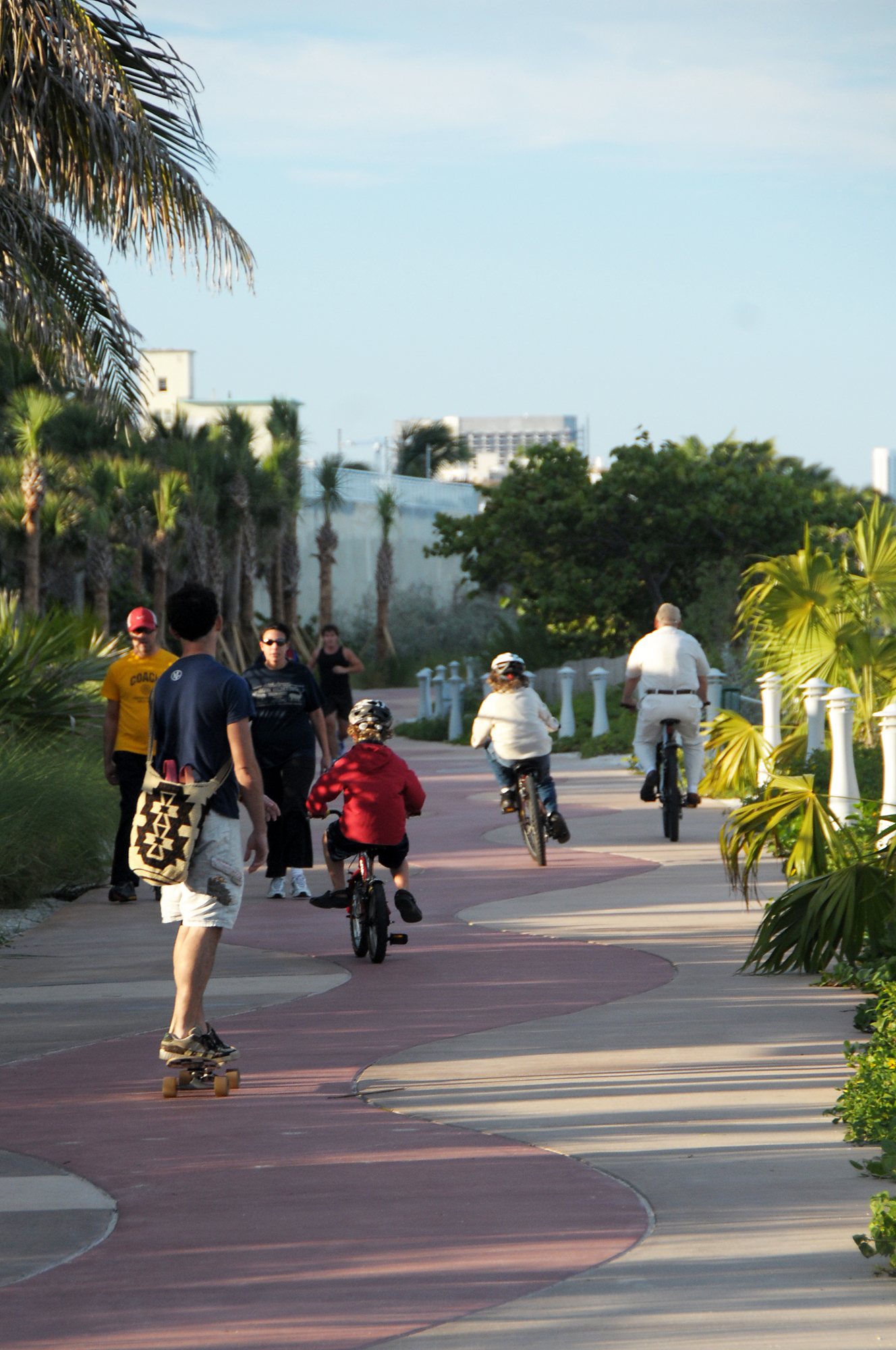
Fabulous concrete along Miami Beach at 76th Street
Are special materials really important to getting the streets we want?
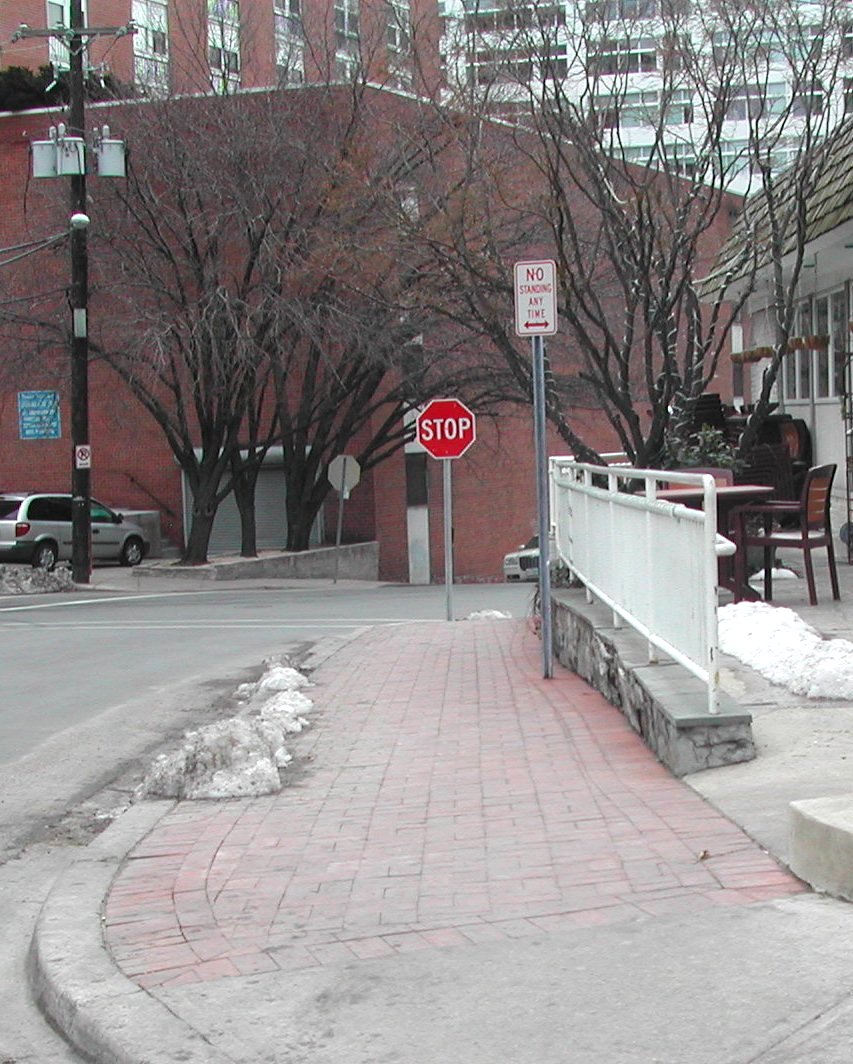
Is this…
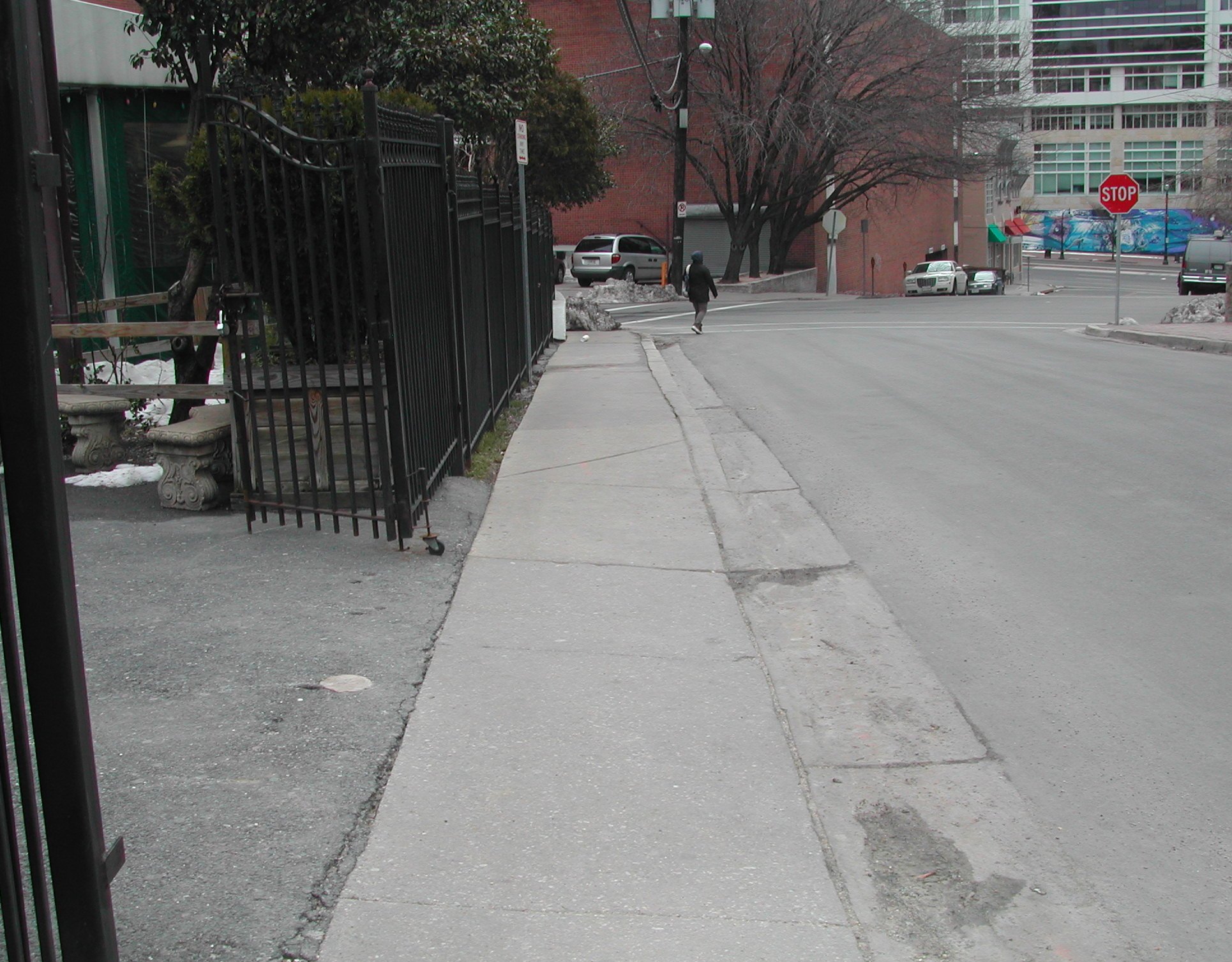
so much better than this?
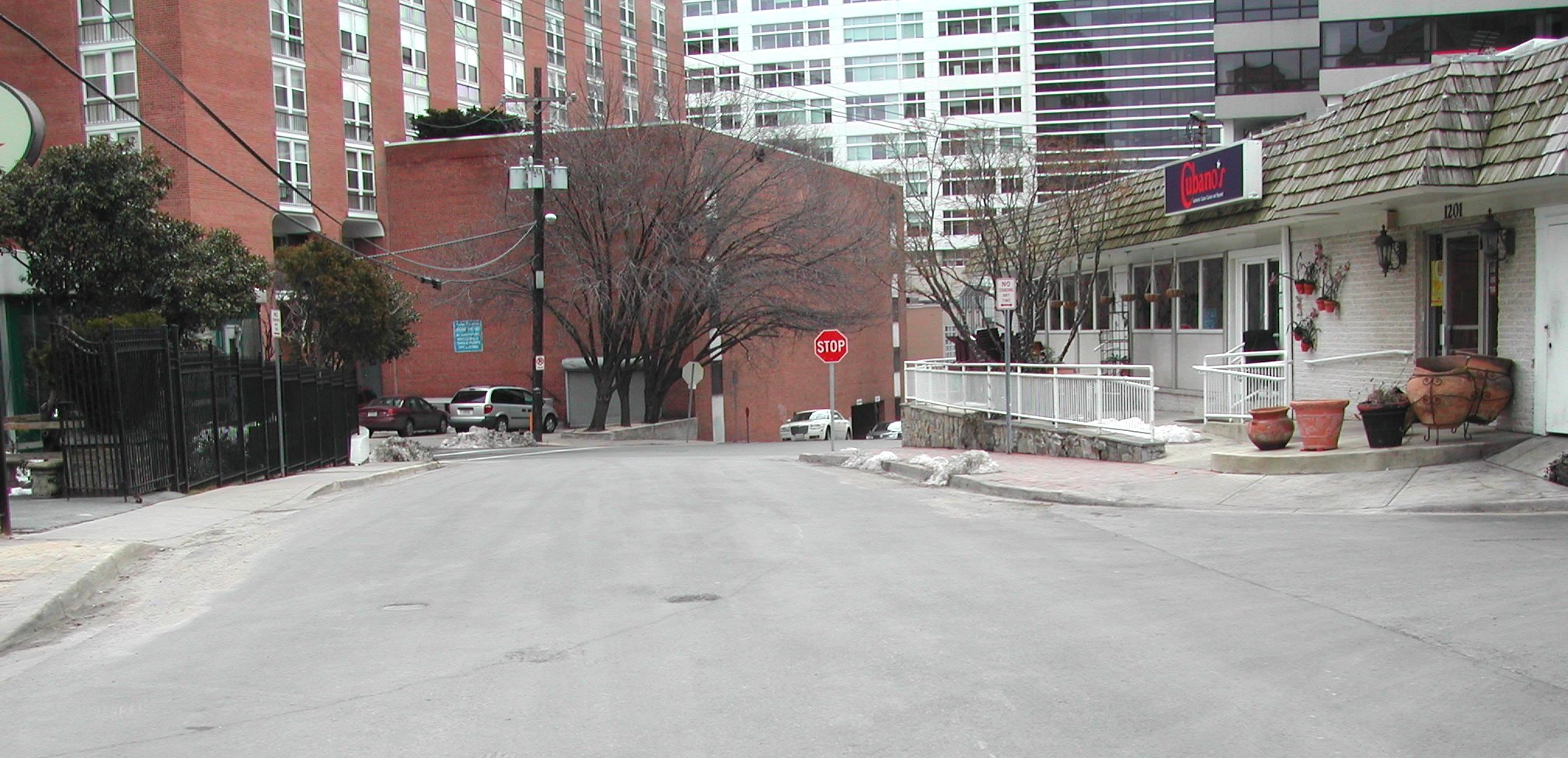
It’s still all about this place:
GK
This reminds me of Lincoln Road in Miami Beach, all those pedestrian feet hitting colored concrete. A new project, the 1111 garage mentioned elsewhere reinterpreted Morris Lapidus early 60s racing stripes (alternating black and white concrete bands) with large black and white stones set into similarly sized stripes. Everything for a planner to gush over.
The pedestrians by and large don’t seem to notice, except those many with a propensity for wearing high heels: then the new pavement is a nuisance.
Planners note: one of the main reasons people flock to public spaces is to watch other people: why would you make things uncomfortable for some of them?
Bob
I’m sure you don’t mean Ramsey Avenue looking toward the Discovery Building in Silver Spring is the “Road to Hell.” …. Good intentions…. I know.
Pavers look much better. I walked up 8th Street from Pennsylvania Avenue toward the National Portrait Gallery last night. The last block is pavers and granite on the right side and a plain concrete sidewalk on the left side. The right side is much more attractive.
By the way, I think colored concrete is a bad idea because of maintenance issues. It can’t be repaired without looking really bad.