Skip to content

High Line

May 21 12

What Does the Future Look Like?

by claudia kousoulas

According to a report on NPR, population worldwide is moving to cities. This is not a new trend; cities have always been centers of opportunity, but now that population threatens to overwhelm capacity it is more important than ever to build them right.

While some countries are building new cities from scratch, places that will “win” are those that already have infrastructure and are making best use of it. As Harriet Tregoning, D.C.’s planning chief pointed out at a panel discussion at the National Building Museum, even in this recent recession, communities that did best were those that are “dense, mixed-use places.”

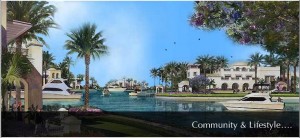
Not Boca Raton, but the romantically named, King Abdullah Economic City

As part of the Washington metropolitan area, Montgomery County has long recognized that it faces a growing population, but only recently have we thought about new ways to handle that growth.

We’ve already made some good decisions that will serve us in the future. Setting aside the Agricultural Reserve as inviolable has left it to develop emerging value for local farming. Focusing growth at Metro stations has stanched sprawl, created job and housing choices, and built the local economy.

Current planning efforts–Bus Rapid Transit, the Purple Line, the Corridor Cities Transitway, community-specific design guidelines, urban park standards, even moving our record keeping to computers–will help County residents get where they want to go, define their communities, and get the information they need.

These are not greenfield planning efforts, but a thrifty use of infrastructure, information, and systems we already have. It’s an approach other cities are using as well. In New York, the wildly successful High Line park is layered on top of an old elevated rail line, turning an eyesore into an asset. The Digital City initiative is using technology to deploy existing data in ways that improve New York’s functioning and communication with its residents. Cities around the world are establishing bike share programs and thereby creating a new transportation system.

It’s squeezing stuff in–local parks above ground, a corner of sidewalk turned over to a bike dock, threading new cable through existing channels–that ironically, doesn’t feel like constriction, but feels like opportunity.

Aug 9 11

High Line Part Two

by claudia kousoulas

The second half of the High Line opened this summer and even though it’s a one-off, not likely to be funded in these straightened budget times or replicated in less dense environments, it’s still intersting to think about making parks out of places that are not traditionally green.

Enjoy the pictures.

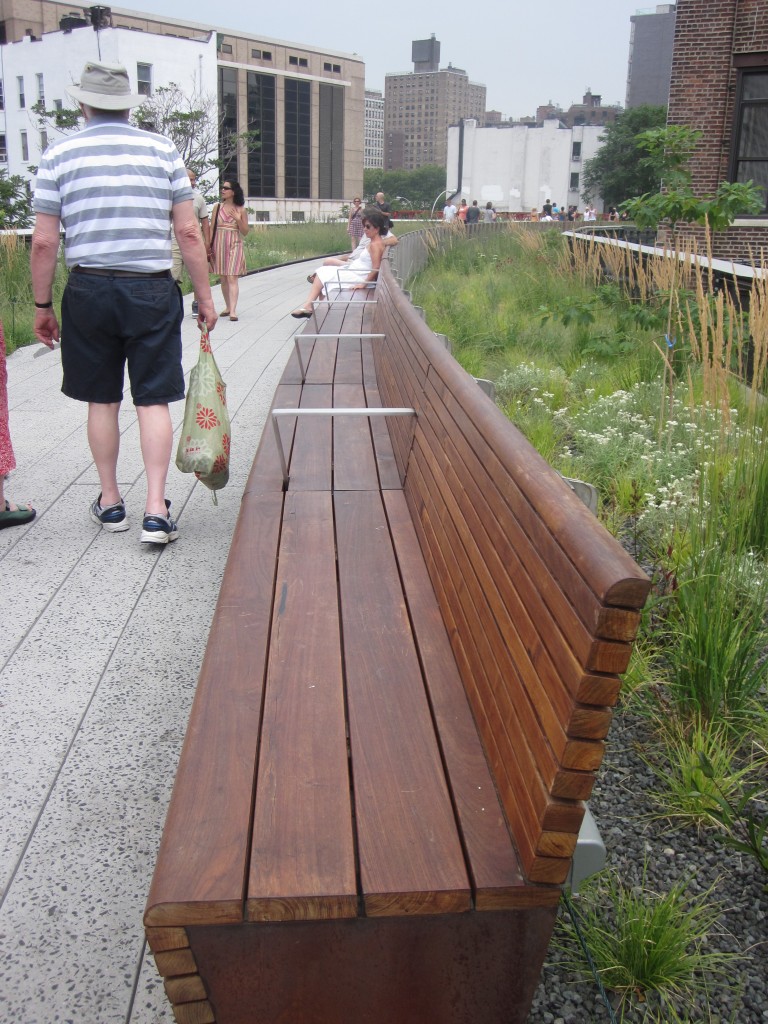
simple seating and lots of it

seating as an environment and an experience

one of the repeated design features on this leg are seating spurs that reference the park's past as a rail line and allows the user to step out of the traffic flow. Another feature is raising the metal grid path above the original surface, saving a bit on landscape materials and maintenance


unlike the first leg, property owners now know the High Line's value added and developed accordingly, even before the park was finished

a simple but charming design effect. The path's jog makes it look like strollers are in the middle of a field

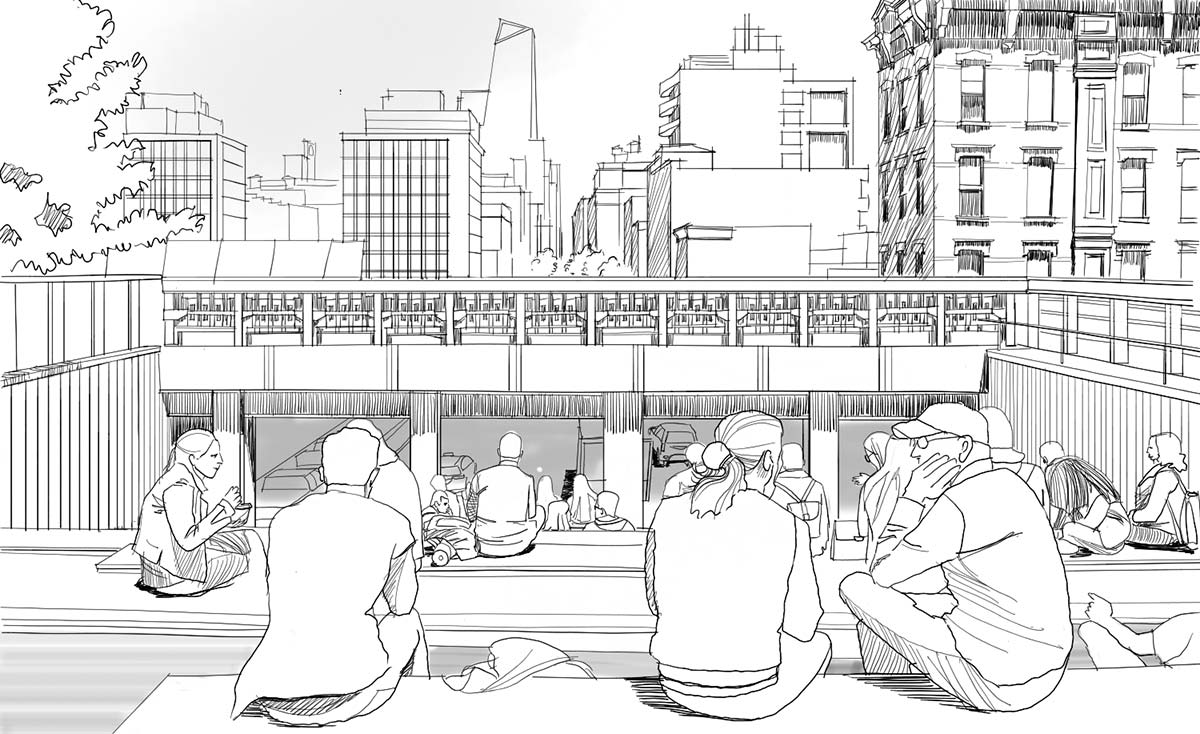
and they have managed to fit in a field--a small one--evlivened by a casual choral performance on the built in bleacher seats

Switch to our mobile site