Posted: by

Note: This archive page is no longer updated and may contain out-of-date information.

Guest post by Scott Whipple

The Washington Post’s “Where We Live” blog recently featured Washington area mid-century architecture (Washington’s mid-century modern neighborhoods | Washington’s mid-century modern neighborhoods, part 2), making mention of a number of Montgomery County’s recent past resources — including the Rock Creek Woods, Hammond Wood, and Carderock Springs National Register historic districts.

A single-story, mid-century house with large windows is surrounded by tall, leafless trees and shrubs. The house has a brown roof and is set on a grassy lawn beside a paved road. A brick chimney is visible on one side.

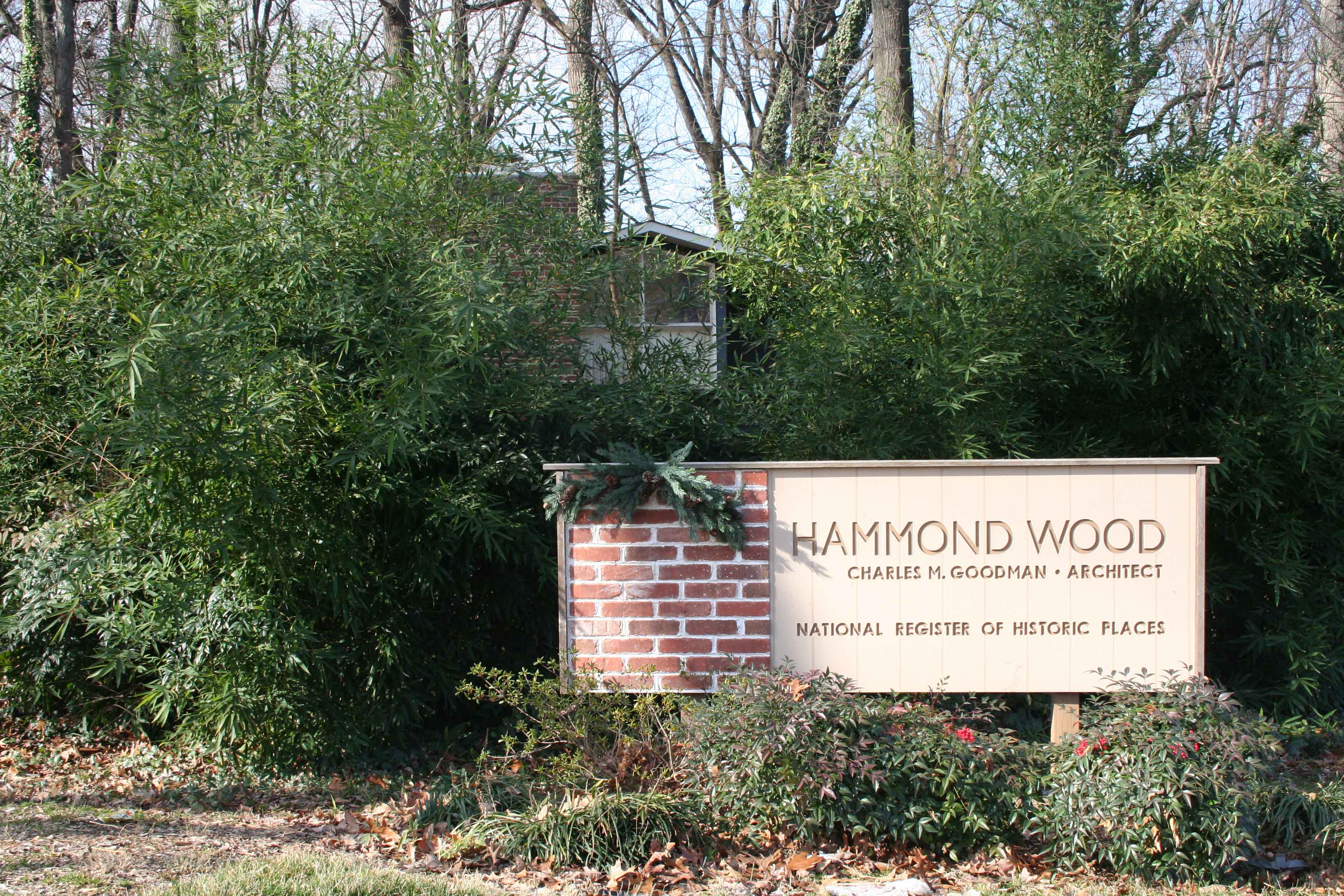
Hammond Wood

Sign partially obscured by foliage, reads "Hammond Wood, Charles M. Goodman - Architect, National Register of Historic Places," set against a background of trees.

Hammond Wood’s pedigree

A mid-century modern house with a flat roof is surrounded by trees. A vintage car is parked on the driveway leading to the house. The lawn is neatly maintained, and the setting appears peaceful and secluded.

Carderock Springs

As Amanda Abrams writes in the first post, “I’ve found that once I look for them, I start seeing modernist communities everywhere.” We expect to be seeing more mid-century resources, too. So we’ve started the MontgomeryModern initiative to explore our county’s mid-century architectural history. We share the excitement about this architecture that Michael Shapiro mentions in his post, and we hope you will come along with us we discover MontgomeryModern.

Montgomery Modern explores mid-century modern buildings and communities that reflect the optimistic spirit of the post-war era in Montgomery County, Maryland. From International Style office towers to Googie style stores and contemporary tract houses, Montgomery Modern celebrates the buildings, technology, and materials of the Atomic Age, from the late 1940s through the 1960s. A half century later, we now have perspective to appreciate these resources as a product of their time.