Note: This archive page is no longer updated and may contain out-of-date information.
guest post: Scott Whipple
Back in June I wrote about the Historic Preservation Commission’s approval of a proposal to install solar panels on the roof of the Sycamore Store, a historic site designated in the Montgomery County Master Plan for Historic Preservation.
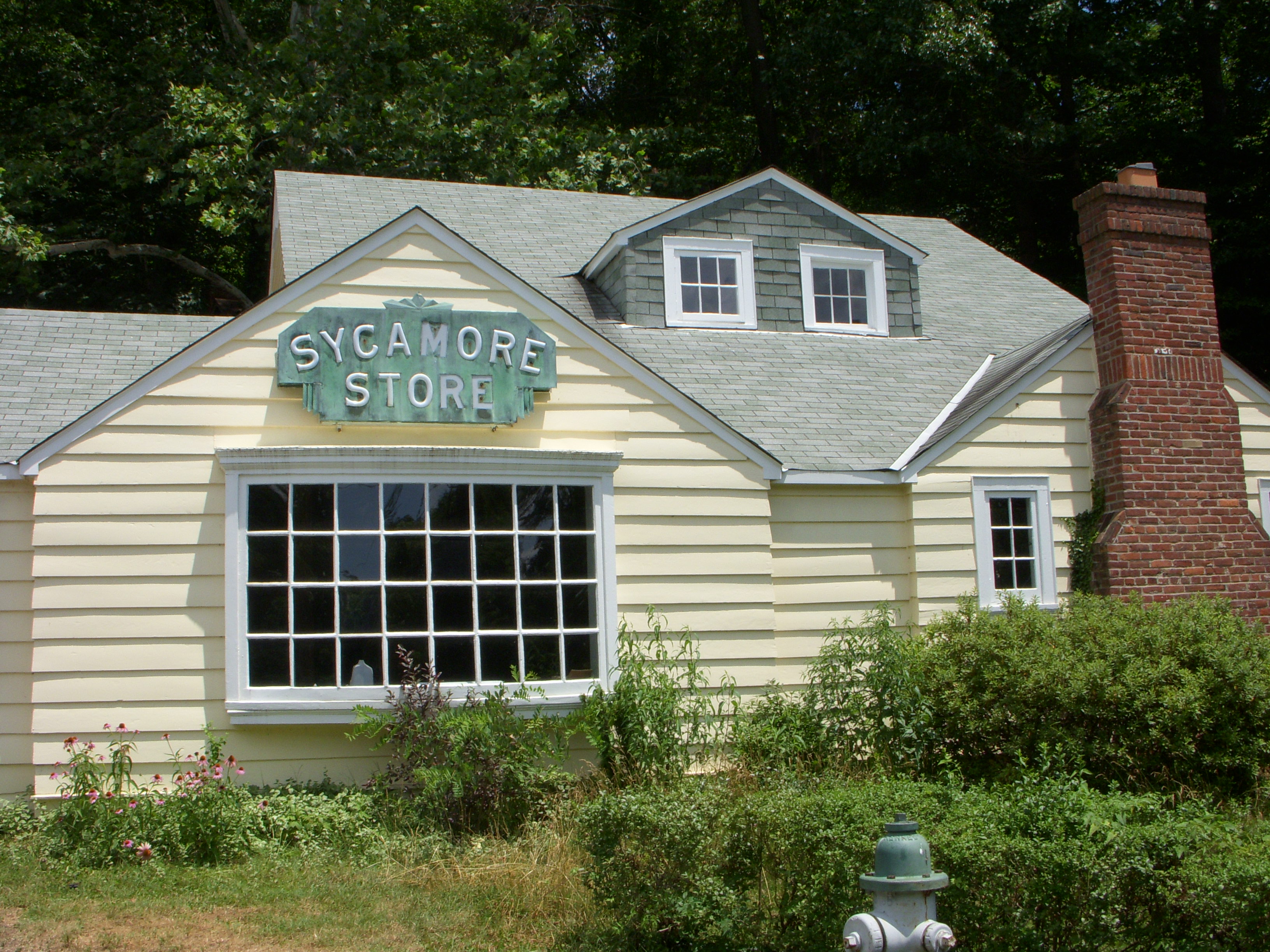
Sycamore Store, before solar panels
The panels have been installed. Have a look.

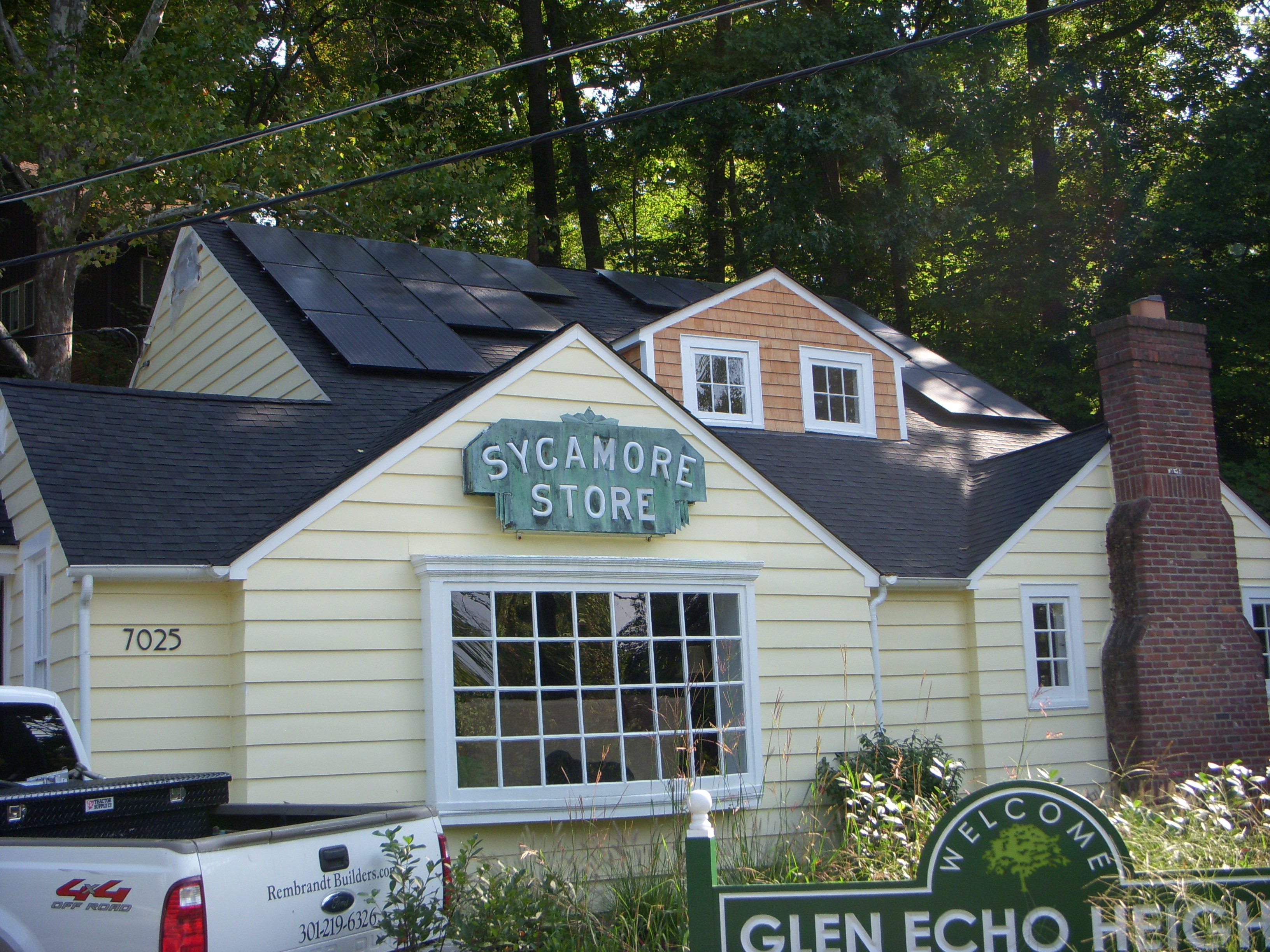
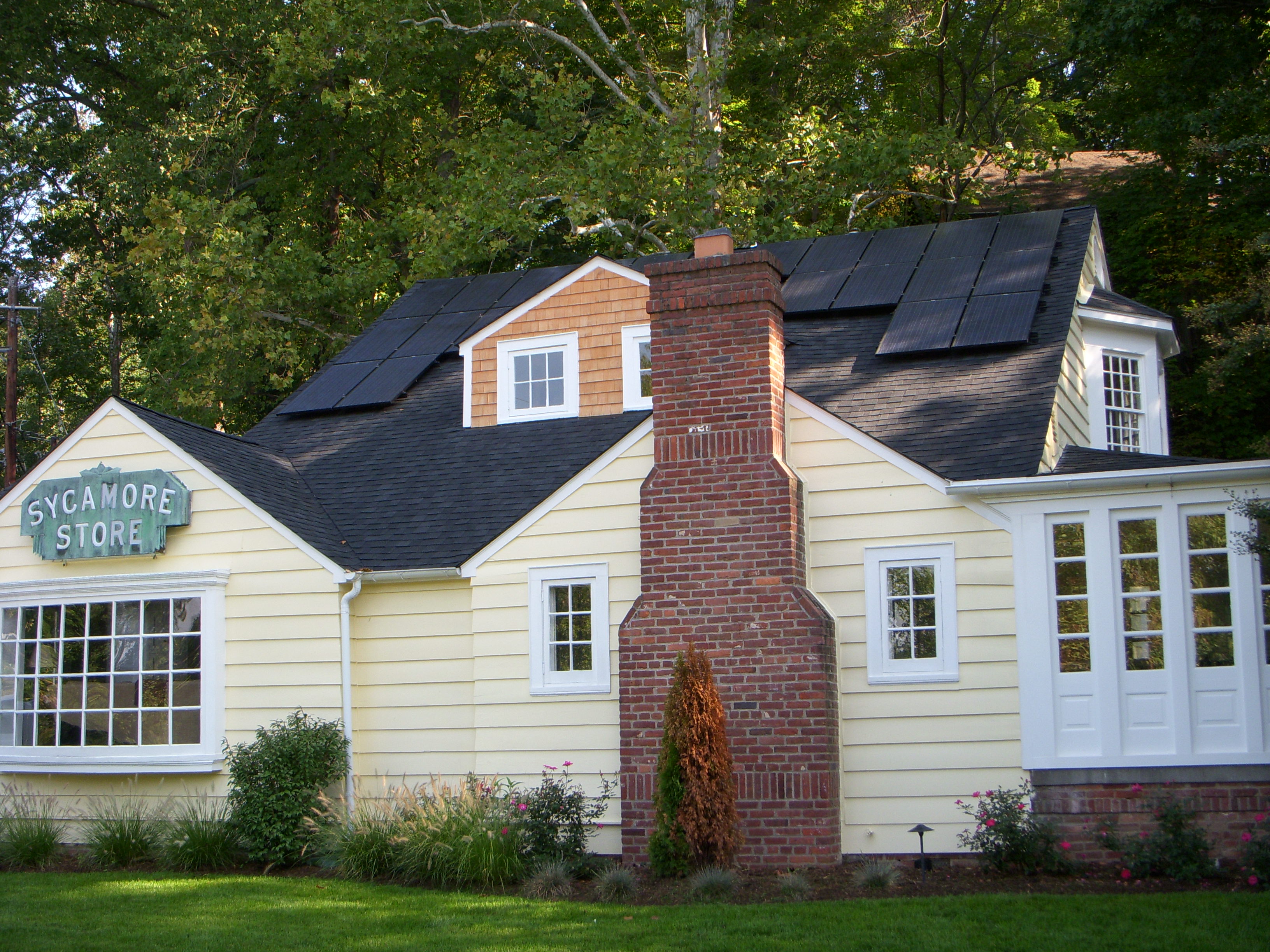
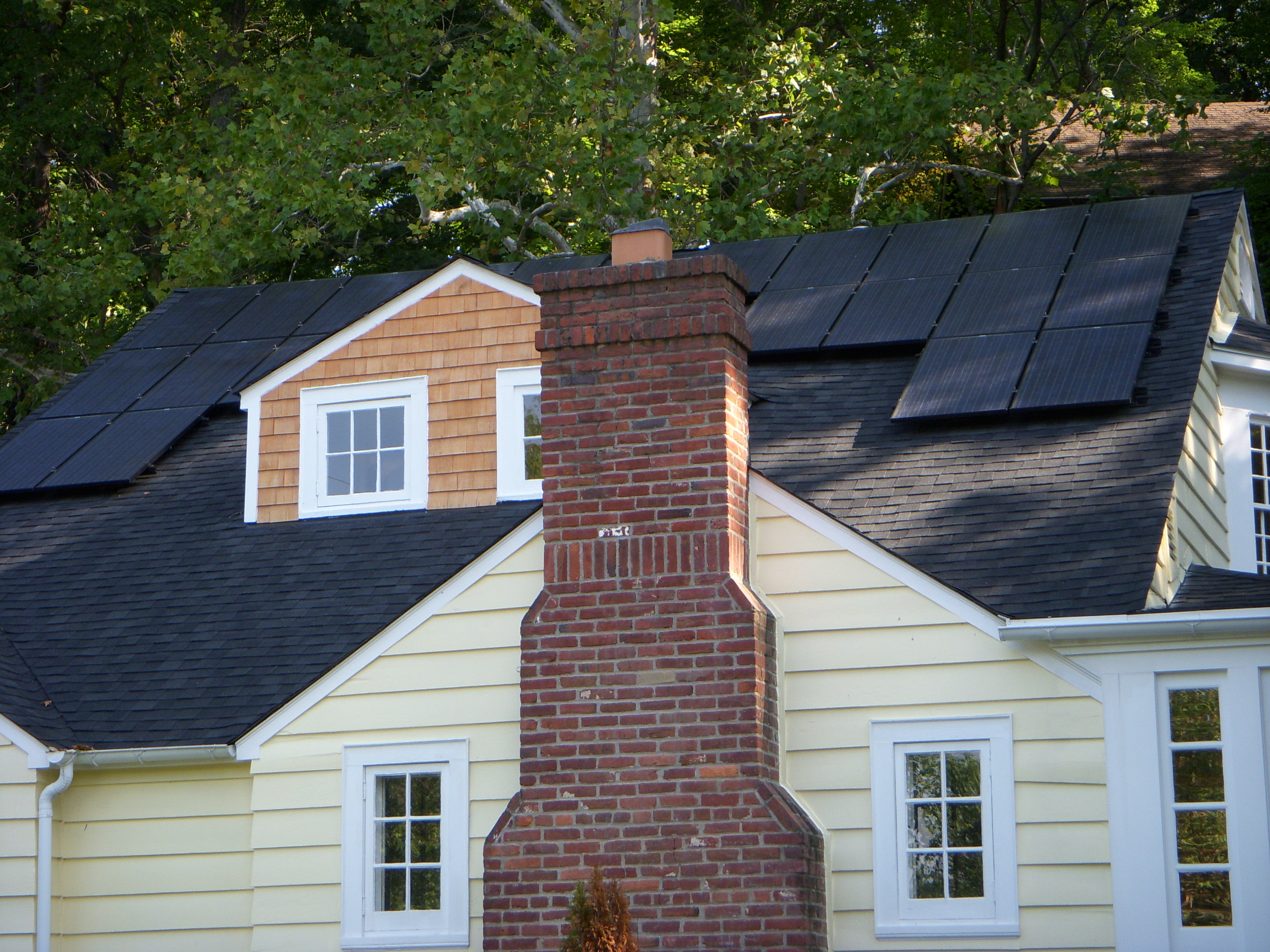
As discussed back in June, putting solar panels in a highly visible location on a historic resource is not the preferred alternative from a historic preservation perspective, and it is not appropriate in many instances. But sometimes, as with the Sycamore Store, it may be the only place on a site where solar panels will operate effectively. And, given the nature of the historic resource and the design of the facility, the installation may be compatible with the historic building.
With the project complete, I think the Sycamore Store installation works and illustrates well that preservation and sustainability can and do support each other. In my view the Historic Preservation Commission got it right.
Leave a Reply