This blog is part of a series that highlights the winners of the 2025 Design Excellence Awards.
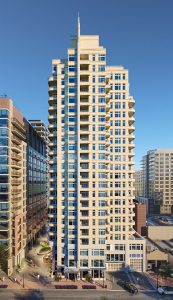
With a strong, transparent base to the building massing, and a strong top, The Sophia enhances a safe and vital pedestrian environment and helps create a unique skyline within the city.
Architecture demands an expression in response to different settings. It is based on an evolving common understanding of the structure of places, subject to reinterpretation by each architect. Architects should value what exists through sensitive and thoughtful designs that are generative and timeless so that all buildings become a point of departure within their urban context for subsequent building designs.
Architectural style should emerge from the adaptation, evolution, and transformation of buildings and landscapes within their regional context. From this foundation, an appropriate design language for a building can be determined. For a residential building, a modern aesthetic can coexist with comfort and elegance when guided by design principles rooted in the past.
The Sophia in Bethesda exemplifies this approach. Selected as this year’s Design Excellence winner for Exceptional Housing by an independent jury of nationally recognized architects, landscape architects, and developers, the building is timeless, respectful of its surroundings, and creates a modern destination in the heart of Bethesda’s Woodmont Triangle.
Sculptural Form and Urban Presence
The Sophia stands out on the Bethesda skyline with its distinctive sculpted massing: a central tower flanked by two south-facing wings that frame a shallow courtyard. Curved masonry balconies soften the building’s corners, emphasizing its unique sculptural character. The jury praised this configuration for providing most units with abundant solar access and sweeping views across the DC region.

Exquisite masonry detailing and modulation of the massing of the building brings an elegance to the through-block paseo, helping to create a public destination within the Woodmont Triangle neighborhood.
Beyond the Building: A Connected Urban Fabric
The design language extends beyond the building itself, shaping the surrounding network of streets, infrastructure, and open spaces to harmonize with the city’s form. Prominent bays facing the two fronting streets of the tower engage both residents looking out and pedestrians looking in. Active ground-floor lobbies and retail spaces enliven the streetscape and connect to a through-block paseo to the north. Service areas are consolidated into a single access point, minimizing sidewalk impact and maximizing retail opportunities at the street level.
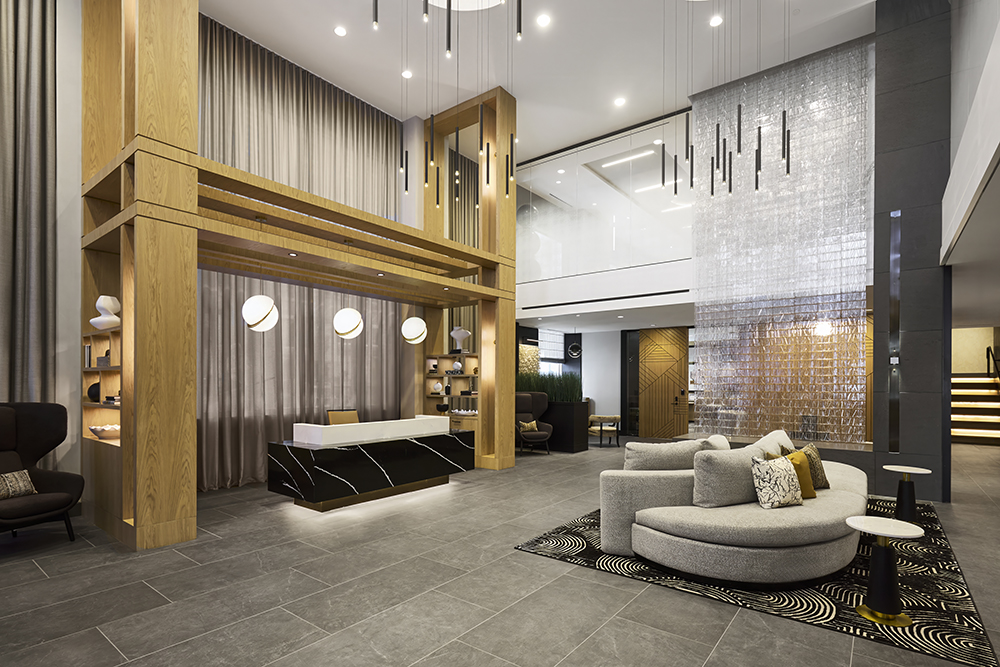
Beautiful, open interiors brings light into the building and enhances a strong public realm at the sidewalks.
Transforming an Underutilized Site
Developed by Duball, LLC, The Sophia transforms a formerly underutilized mid-block parcel into a sculptural, Art Deco–inspired residential tower that reinforces Bethesda’s walkable, transit-oriented character. The 22-story mixed-use development replaces low-rise commercial buildings with 276 residential units and 5,176 square feet of retail, supported by underground parking. Despite challenges such as limited street frontage and no rear access, the design enriches the public realm by framing a generous mid-block pedestrian paseo linking Fairmont and St. Elmo Avenues, which activates one of Bethesda’s longest blocks. Setbacks ensure light and air for neighboring properties, shaped through an iterative review process with Montgomery Planning.
A Vision for Sustainable Urban Living
Located within walking distance of the Bethesda Metro station, The Sophia aligns with Montgomery County’s Thrive Montgomery 2050 vision for sustainable urban density. Ground-floor retail energizes the street, while upper-level residences prioritize comfort, natural light, and expansive views. The project reflects a collaborative effort: David M. Schwarz Architects led façade and massing design through entitlement, Maurice Walters Architects served as architect of record, and Hartman Design Group delivered interior design.
The Sophia elevates its neighborhood by integrating architectural excellence with urban responsibility. It introduces much-needed housing, activates the public realm, and demonstrates how a high-rise can feel both iconic and welcoming. As the jury noted: “The care and consideration given to the massing of this building makes it stand out as a timeless residential address. It is a beautiful addition to the street and the city.”
The Sophia is more than a building: it is a thoughtful, generative design that honors the past while shaping the future. It sets a precedent for exceptional urban living in Montgomery County and the region.

About the author
Paul Mortensen is the Senior Urban Designer in the Director’s Office at the Montgomery County Planning Department and leads the Design Excellence program. He is a registered architect in California, Washington, and Maryland, is a LEED-Accredited Professional, and is a member of the Congress for New Urbanism.
Leave a Reply