Skip to content

urban design

Mar 25 13

New Transit & New Artwork Coming to Arlington

by joshua sloan
berstein panel 01

As many of you know, two streetcar lines are proposed for Arlington County: one along Columbia Pike and one through Crystal City.

Many of the benefits of the transit system are laid out in the planning vision for Columbia Pike & Crystal City, including:

  • Encouraging smart development;
  • Providing attractive, comfortable, affordable transit,
  • Encouraging revitalization, preservation, and affordability, and
  • Spurring investment.

 Arlington Streetcar Map

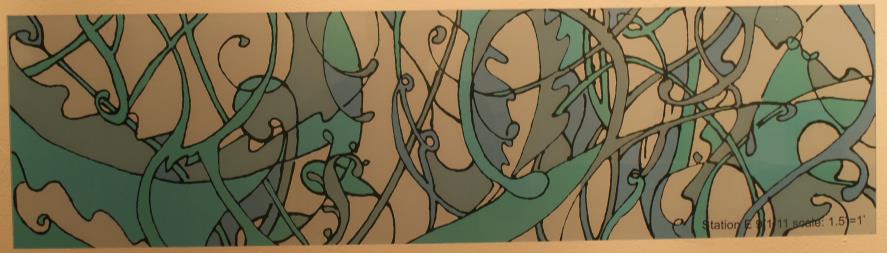
Another aspect of the project, however, is a commitment to integrate public art.  In this case, Barbara Bernstein has been commissioned to create works for several bus shelters along the Crystal City line.  Prototypes, renderings, and sample designs were on view until recently at the Arlington Arts Center, but information can still be found on their website.

bernstein plan view

The proposed artworks are large glass panels that will provide windscreens in addition to enhancing the beauty and interest of each stop.  The designs themselves are swirling, waving, looping, interconnected lines meant to serve as a metaphor for the interconnected layout of the system and the lives of the passengers.  As the lines randomly intersect they create shapes – some of which are filled with color, while others create a background of negative space.  Each station will have a distinct color palette that will provide a visual means of identification for each stop.

berstein panel 01

berstein panel 02

berstein panel 03

The panels are pretty, well-composed, and eye-catching but also serve a functional purpose as wayfinding guides.  Like many transit-oriented artworks, the identification of a site with a motif or specific installation is an important piece of a well-integrated and designed transit system.

Of course, Montgomery County is in the midst of planning a wide-ranging rapid transit system.  We would be wise to encourage public art integration in our system for many reasons, some of which were discussed in a recent panel discussion at the National Building Museum on Cultural Investments: Economic Impact of the Arts.  This discussion was part of a three-part series, Culture as Catalyst: Past, Present, Future.  (The third program, Industry to Art: Revitalizing Cities through Culture will be held on April 10, 2013.)

Robert Lynch, President and CEO of Americans for the Arts, summarized the basic economic impact of the arts industry at the discussion and also in an article at Huffington Post last June:

“Of the $135.2 billion of economic activity generated by America’s arts industry, $61.1 billion comes from the nation’s nonprofit arts and culture organizations and $74.1 billion from event-related expenditures by their audiences. This economic activity supports 4.1 million full-time jobs and produces $22.3 billion in revenue to local, state, and federal governments every year — a yield well beyond their collective $4 billion in arts allocations.”

See the Arts and Economic Prosperity IV website for more information on national and specific local findings.

There are, however, numerous other reasons why the integration of public art is important to vital transit systems; for example:

  • Establishing “brand” and community identity;
  • Making use of and beautifying infrastructure;
  • Creating vibrancy and interest;
  • Provoking emotional investment;
  • Enhancing pedestrian and user comfort; and
  • Telling stories of culture, history, process, or environment.

If we ever get the Silver Spring Transit Station finished, maybe another icon of transit-related public art, “Penguin Rush Hour” by Sally Callmer, can be renovated and reinstalled.  Let’s start the fund-raising now!

penguins 01

penguins 02

May 18 11

A Learning Opportunity from NCPC: Contemporary Design, Historic City

by joshua sloan
What:

2011 NCPC Speaker Series
Contemporary Design, Historic City:
The Balancing Act Between Innovation & Preservation

When: Tuesday, June 7, 2011
6:30 – 8:00 PM
Where: Koubek Auditorium – Crough Center for Architectural Studies
School of Architecture and Planning
Catholic University of America

RSVP here.

As a city filled with historic structures and landmarks, architectural preservation in the nation’s capital receives a lot of attention. Yet, as Washington continues to evolve, there exists a growing need for new development and a desire for more modern and inventive architecture. Making sure the two can successfully co-exist is the responsibility of the agencies involved in the planning and design review process. Join a panel of distinguished design and planning experts as they explore how Washington D.C. can welcome new innovative design into its urban fabric and preserve its architectural heritage.

This event is being held in partnership with Catholic University School of Architecture and Planning and AIA DC. Attendance is free and open to the public. RSVP is encouraged.

May 17 10

Elemental Art at United Therapeutics

by joshua sloan

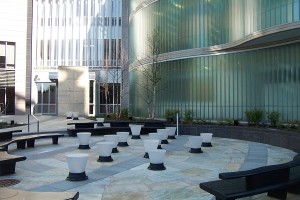
Several sculptural seating elements were created in the plaza space at the new United Therapeutics campus in Silver Spring (corner of Cameron and Spring) and I’ve only begun investigating their interactive potential. Scattered throughout the space and into the sidewalk, these 17- 23-inch poly-resin pieces are shaped like inverted cones stuck into the ground. Several have the symbols of elements, others have designs, most are undecorated.

ut plaza 02

Although fun and functional during the day, their real impact is seen – and heard – at night. The translucent poly-resin material houses LED lights that change color in random patterns based on pedestrian motion or according to a program. Whether this feature is “on” yet, I can’t tell – the colors intensified and faded while I was there, but I wasn’t sure if I was “causing” anything to happen.

Also when I was there, I had forgotten that the installation was also tied into sound system that broadcasts original compositions into the plaza. The music I heard was new-agey and calm and fitting. This may be tied into displays on a future “Bio-Wall” feature that will show visual images and programs run by United Therapeutics and the AFI Silver Theatre. Something to look forward to!

In all, the entire space, including well-integrated plantings, water feature, seating, artworks, and architecture, is an exemplar of design excellence that we – as a county – should emulate. This open space will come to life when the adjacent residential buildings and retail shops start filling as the economic market begins its slow, steady rise back up.

Apr 27 10

MRO Garden Plan

by claudia kousoulas

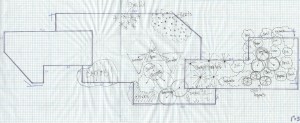
The group got together last week to lay out the garden and quickly realized it was bigger than we thought and gets less than ideal sun. Nonetheless, we are planning on carrots, lots of chili peppers, some dwarf tomatoes, and a few central trellises of beans and cucumbers. And we are counting on that garden-workhorse, zucchini, to do its part.

Laying out a garden always makes me think of urban deisgner, Kevin Lynch, who taught at MIT for 30 years and was the author of the still influential book, Image of the City. In it, he coined the word “wayfinding” to describe how people identify the paths, edges, districts, nodes, and landmarks in their communities to navigate the places they live. (The phrase wayfinding has, unfortunately, come to mean cheesy sign systems that are often used to remedy poorly designed places.)

It’s fun to think of your own community this way. When do you feel you’ve left your neighborhood? What are the paths you travel and what are your own personal landmarks?

I’ve left my neighborhood when I reach the bottom of the hill and one of my primary paths is Massachusetts Avenue, because it leads to my personal landmark, the library. And a node, why the corner of Fenton and Ellsworth, of course.

Lynch was working on his last design, for his vegatable garden, when he died in 1984 at his home on Martha’s Vineyard.

And that’s a roundabout way of giving you a bit more planner’s jargon.

Mar 23 10

The Road to Hell…

by claudia kousoulas

…is paved with brick, “special” light poles, custom garbage cans,  and light pole banners. You don’t need to be a keen-eyed tracker to read the signs–planners have been here.

But are special materials necessary to create a good design or great architecture? Frank Gehry made his name with chain link and corrugated steel. Without a designer’s hand these are the materials of a shantytown. The Case Study Houses are icons of modernism, but they were originally built with off-the-shelf materials, intended to be accessible to the average Joe and Josephine.

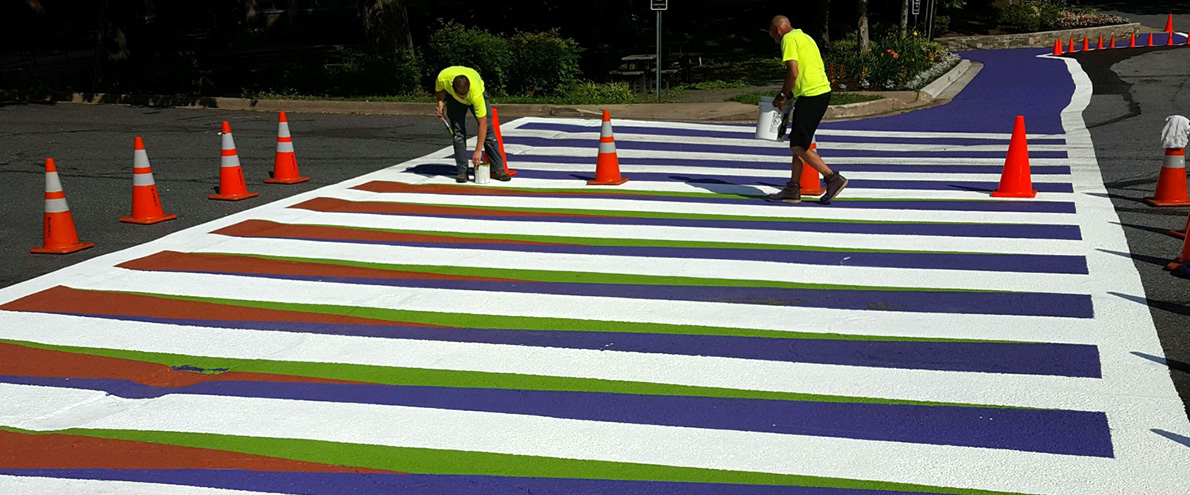
The request or requirement for special materials is well-intentioned, but not necessary. With artistry, asphalt and concrete become unique reflections of place. 


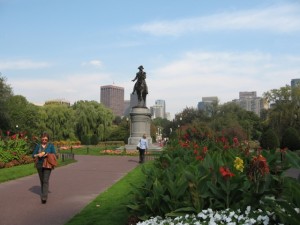
Neither the ducklings nor the pedestrians in the Boston Public Garden mind asphalt paths

Fabulous concrete along Miami Beach at 76th Street

 Are special materials really important to getting the streets we want?

Is this...

so much better than this?


 It’s still all about this place:


Switch to our mobile site