Skip to content

Design

May 31 11

Eco -logy meets eco -nomy: it all comes down to home.

by joshua sloan

Excerpts from David Korten’s “Living Buildings, Living Economies, and a Living Future” from Yes! online, May 18, 2011:

“Integrating multi-purpose buildings into a larger multi-building neighborhood or district system adds opportunities to develop public green spaces, community gardens, edible landscaping, and small-scale poultry and livestock production, as well as natural wetlands and living machine water purification to continuously recycle nutrients, water, and energy.

Integrative projects also create opportunities to balance the utility loads of businesses, which generally have greater energy needs during the day, and residences, which have greater needs during nonbusiness hours. Bringing residences, employment, shopping, and recreation together in close proximity minimizes transportation requirements and facilitates the sharing of autos, bicycles, appliances, and tools, and community connections to mass transit, bike trails, and other transportation alternatives.

The living economies movement seeks to displace this failed economic system with a planetary system of resilient, self-reliant local economies comprised of human-scale, locally-owned enterprises that use local resources to meet local needs in cooperative alignment with the structure and dynamics of local ecosystems.”

Quick thoughts on Korten’s essay as it relates to our County:

The question we are facing locally is what parameters to establish allowing these kinds of systems to flourish (if anything like this is our goal).  It would seem that many objectives need to be balanced against each other for the benefit of the larger community.   For example, density in some areas versus growth limits in others; height on some sites if solar access is maintained for vegetated cover and open space on others; compact development with a flexible integration of uses to allow greater net permeable area within and around development.

More abstractly, we need to think about the general framework before applying untenable parameters on the specific; performance measures versus inflexible standards that are typically derived from acceptable lowest common denominators.  Less process for projects that hit performance measures.  More process as a trade-off for bending the rules to fit a site, community, or program better.  Yes? No?

May 11 11

learning with legos at NBM

by joshua sloan

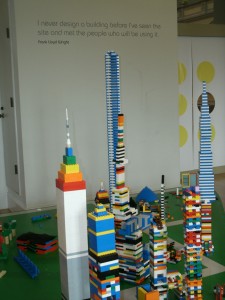
"I never design a building before I've seen the site and met the people that will be using it." Frank Lloyd Wright

The ongoing Lego (R) exhibit, Towering Ambition, at the National Building Museum has some very cool models of famous buildings, but also provides a play area for kids and families.

More interesting than the models, however, are the prompts about land use and community planning hanging around and adorning the space where kids (and adults) can play with the Legos.

Maybe the flat base pieces that Lego kits contain, should have sidewalks and trails?

Rather than focus on cool buildings, like the exhibit, these prompts ask budding designers to think about places beyond the bounds of an individual building, to think like a town planner (and a rather progressive one at that).

The quintessential suburban home....

A nice description of "institutional" uses.

Unfortunately the prompts still relegate land uses to separate building forms, but do suggest locating them near one another.

An expanded view of artisanal, technology, and scientific uses may be needed.

If not integrated uses, at least mixed-use planning. Basis of an interactive civics curriculum on planning?

I think their next exhibit should be reproductions of great plazas, parks, and streets!

May 9 11

Where is the green space for apartment-dwellers?

by joshua sloan

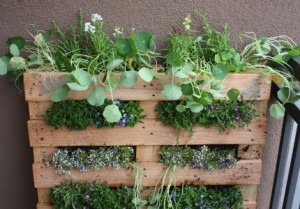
If you don’t have a plot of land, you can still grow flowers, herbs, and vegetables. Fern Richardson writes a great blog on container gardens, Life on the Balcony. And Treehugger has put up a synopsis of her recent designs for using pallets as vertical planters.

from www.lifeonthebalcony.com

May 9 11

art: empowering youth and teaching sustainability

by joshua sloan

Passing along an article and video from LA on a precious resource: Cuidela.

Apr 29 11

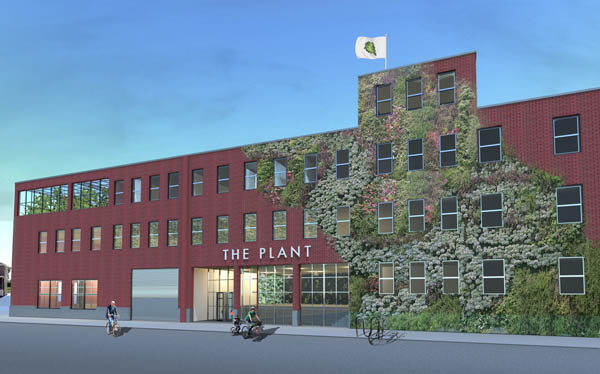
Plant Chicago: more on the apparent topic of the day.

by joshua sloan

Adaptive reuse of existing buildings for agriculture: Plant Chicago – vertical farming and industrial reuse.

Start With a Vision (from www.plantchicago.com)

The Plant: System-Based Thinking (from www.plantchicago.com)

Take a quick look at their philosophy in 2 minutes.

Don’t think we’d have any 40-story buildings, but what if we used less and converted … i don’t know … some of our numerous self-storage facilities to vertical farms?

Sep 14 10

New Yards Park is dressed to impress

by Matt Johnson

This past weekend, the Capitol Riverfront area celebrated the grand opening of the Yards Park.

The new park is located along the Anacostia River between 3rd Street SE and the Navy Yard. It was built as a public-private partnership between the developer of the Yards, the government of the District of Columbia, and the General Services Administration. It’s managed by the Capitol Riverfront BID.

A festival marked the opening this weekend. It included bands, artists, vendors, and more. I had the opportunity to stop by, and I snapped some photos. The park is very well designed, and I can only hope it is an example of future waterfront parks in the area.

It has many features which help to make it a great urban park. In addition to passive spaces like lawns and plazas, a pavilion and terraced steps offer places for programmed activities. I imagine that the boardwalk, with its sweeping views of the Anacostia River, will be very popular.

Greeting people walking from M Street and the Metro is a splash fountain. It was very popular with kids on Saturday. A waterfall drops from the level of the splash fountain into a pool at a slightly lower level. A platform allows people to walk behind the waterfall. And the pool into which the waterfall empties is about a foot deep, which allows people to wade in it.

A walkway around the perimeter of the wading pool leads to a boardwalk alongside the Anacostia. The boardwalk is lower than street level, and where it intersects the pool, there appears to be room for retail underneath the overlook plaza at the level above.

That plaza is adjacent to the “Lumber Shed”, which is temporarily being used as a pavilion. Eventually, it will be enclosed for use as retail or dining.

Further east, terraced steps allow gathering for concerts or performances on the boardwalk, where a stage can be set up.

West of the overlook plaza, a unique steel bridge crosses over the wading pool and leads to a green lawn surrounded by wavy wooden benches. Another passive green space is to the east of the Lumber Shed.

This park is a great addition to Washington. The well-thought design is long overdue and the features give Washingtonians new ways to relax and recreate. Hopefully, DC will find a way to extend this park and also replicate its design elements along other parts of the Anacostia and the Potomac.

Crossposted at Greater Greater Washington.

Jun 16 10

When communities with opposing traffic patterns meet.

by joshua sloan

An elegant, simple design solution to an uncommon traffic problem.  This is design as problem-solving at its best.

The Flipper Bridge.

Flipper Bridge Image from Fast Company

May 20 10

A peek at United Therapeutics phase 2.

by joshua sloan

Rendering from the original application.  Phase 2 (north side of Cameron) to begin soon.

Feb 12 10

Urban Life

by luis estrada

Before moving to the DC area two years ago, I had lived in New York City for the previous 18 . Never owned a car there (or a local driver’s license!),and it wasn’t until I relocated here that I realized how effortless it was to live a pedestrian life there…Stores were abundant and usually well stocked; restaurants, museums, and galleries were everywhere (…mostly frequented by tourists that we locals had to put up with); and in general whatever you needed ), was at your disposal 24 hours a day.

It’s been a bit of a struggle for me to sustain a similar pedestrian life here. I am still coming to terms with giving up an almost zero carbon footprint to the point of considering purchasing a car. (I’m not quite there yet, but even getting groceries in Montgomery County without one can be quite the task!). This is all understandable, given most of our urban centers are still in their infancy, but it has been interesting to me over the past two years that we have heard our efforts to organize density at the planning department characterized as attempts to “Manhattanize” the county. Far from it. Be assured, the phenomenon we now know as Manhattan came to be as result of a very specific set of circumstances that are not present in the county, and will not be, even if a few 300-foot buildings are constructed.

Once you have lived in a place such as NYC for a while, and if you pay attention to what’s around, you will get a “from the ground up” understanding of what the city is all about. It’s curious how visitors tend to look “up” most of the time, without realizing all the excitement happening around them. I am, of course, oversimplifying this, but could it be this is perhaps why some are so fixated on height as a main issue?

What I am trying to say is this: New York means a lot of different things to many, but it’s a great laboratory to study urban life; one that can teach good lessons emerging semi-urban centers such as ours could benefit from, if we can get past our hang-ups about what’s too tall, or what’s too much. To observe how a complex city such as New York functions, and attempt to understand it as an interesting foil for human activity, can give us clues on how to steer our efforts to make our centers lively, and real.

Jan 27 10

When public art isn’t public enough, who does it benefit?

by joshua sloan

Aerial View

One of the most fascinating pieces of public art in Silver Spring is “Coastline,” a sculpted water feature by Jim Sanborn, which is tucked into the plaza near the National Oceanic and Atmospheric Administration at 1301 East-West Highway. For those who know it is there – mostly office workers from the surrounding complex – it is a wonderful place to relax during lunch or coffee breaks. And the lucky kids who come across the piece are transfixed by the threat and prospect of being hit by the spray of the surf.

The sculpture: A large, pneumatically activated pool that sends waves crashing into stacked, sculpted red granite, creating an intense sound and sense of dynamism to which most water features – fountains that flow from one level to another or spray uniformly into the air – pale in comparison. Another fascinating aspect of the piece is that it is tied to actual wave height data being instantly transmitted from the Wood’s Hole, Massachusetts monitoring station. Imagine being at the edge of the Atlantic hearing the surf booming against the beach and rocks. Pause. You’re actually in downtown Silver Spring.

View from Plaza

The problem: A great, interactive piece of art that appeals to our sense of play and intellect sits above sidewalk grade, away from typical pedestrian routes, screened by plantings and benches. This functions more like a private amenity, although it is supposed to benefit the larger public. (Density was awarded to the surrounding development above what would typically be allowed in exchange for this sculpture and other public amenities.)

Lessons learned: Public amenities need to be convenient and reachable, not just legally accessible. They need to be located on pedestrian routes; visible from adjacent properties, open spaces, and sidewalks; and supported by synergistic uses and activities (retail, information kiosks, restaurants, events). In sum, the landscape, the artwork, and the architectural environment need to be integrated into how space – the immediate and contextual space – is traversed and activated. This is our charge and our responsibility for projects that provide public art as an amenity.

Visit Jim Sandborn’s website to learn more about the artist and Downtown Silver Spring’s website to learn more about the project.

Switch to our mobile site